
Key takeaways
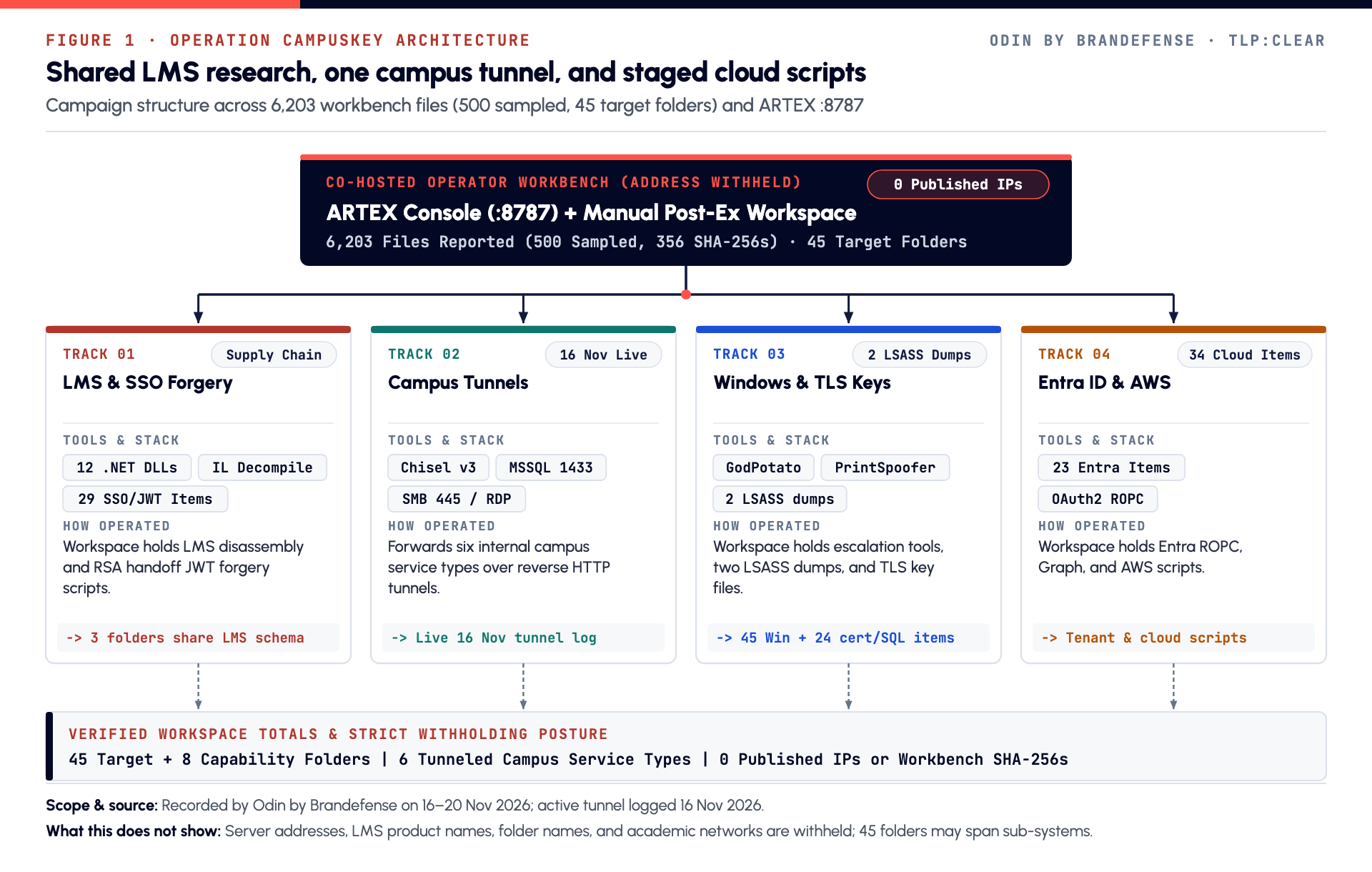
- Operation CampusKey pairs a co-hosted ARTEX console (:8787) with manual .NET reverse engineering of a shared regional LMS deployed across South Korean universities.
- Across 500 sampled entries (70.89 MB) from a 6,203-file workbench, 379 sit in 45 numbered target folders, 55 in 8 capability folders, and 66 in root.
- The operator disassembled 12 .NET DLLs, built 29 RSA/JWT SSO token-forgery items, and stored database dumps of the identical LMS schema across 3 target folders.
- A live 16 November 2026 Chisel log forwarded six internal campus service types (MSSQL, SMB, RDP, WinRM, FTP, and SSAS); the workbench also held 2 LSASS dumps and 23 Entra items.
- Rotate LMS SSO signing keys per campus, require MFA so Entra ROPC password grants fail, isolate e-learning servers in DMZs, and alert on Chisel WebSocket tunnels.
An operator paired an ARTEX console (TCP 8787) with .NET reverse engineering of an LMS used by South Korean universities. Odin by Brandefense analyzed a 500-entry sample from the 6,203-file workbench recorded on 16–20 November 2026.
When campuses share a portal module, a weak SSO handoff can create a cross-campus supply-chain attack path. The server holds campus database dumps, LSASS dumps, and TLS private keys. All server addresses, workbench-file SHA-256 digests, folder names, LMS vendor names, and campus names are therefore withheld.
How was the 6,203-file workbench organized, and why does the timing matter?
On 26 October 2026, South Korean police announced the 15 October arrest of a suspected ringleader accused of using ARTEX across roughly 90 organizations. Police reported 8.2 million stolen records while six suspects stayed under investigation. The CampusKey ARTEX console (16–19 November), live campus tunnel (16 November), and 6,203-file directory (20 November) ran one month after that arrest.
Artifacts alone do not show whether this server belongs to remaining suspects, copycats, or a separate operator targeting the same regional stack. That question remains open. Campus teams can use external attack surface management to find exposed consoles and cyber threat intelligence to investigate related tradecraft.
The 500 sampled entries include 388 sized files totaling 70.89 MB and 356 unique SHA-256 digests. Scripts (227, led by 147 .py and 25 .ps1) and text or log files (150) make up 75.4% of the sample. Across folders, 379 entries (75.8%) sit in 45 numbered target folders, 55 (11.0%) in 8 capability folders, and 66 (13.2%) in root.
Directory listings alone do not show whether all 45 numbered folders map to 45 distinct campuses or several sub-systems per campus. A separate /24 cloud host (41 entries on 16 November) shares 0 SHA-256 hashes with the main workbench. We treat that second server strictly as an unconfirmed neighbour.
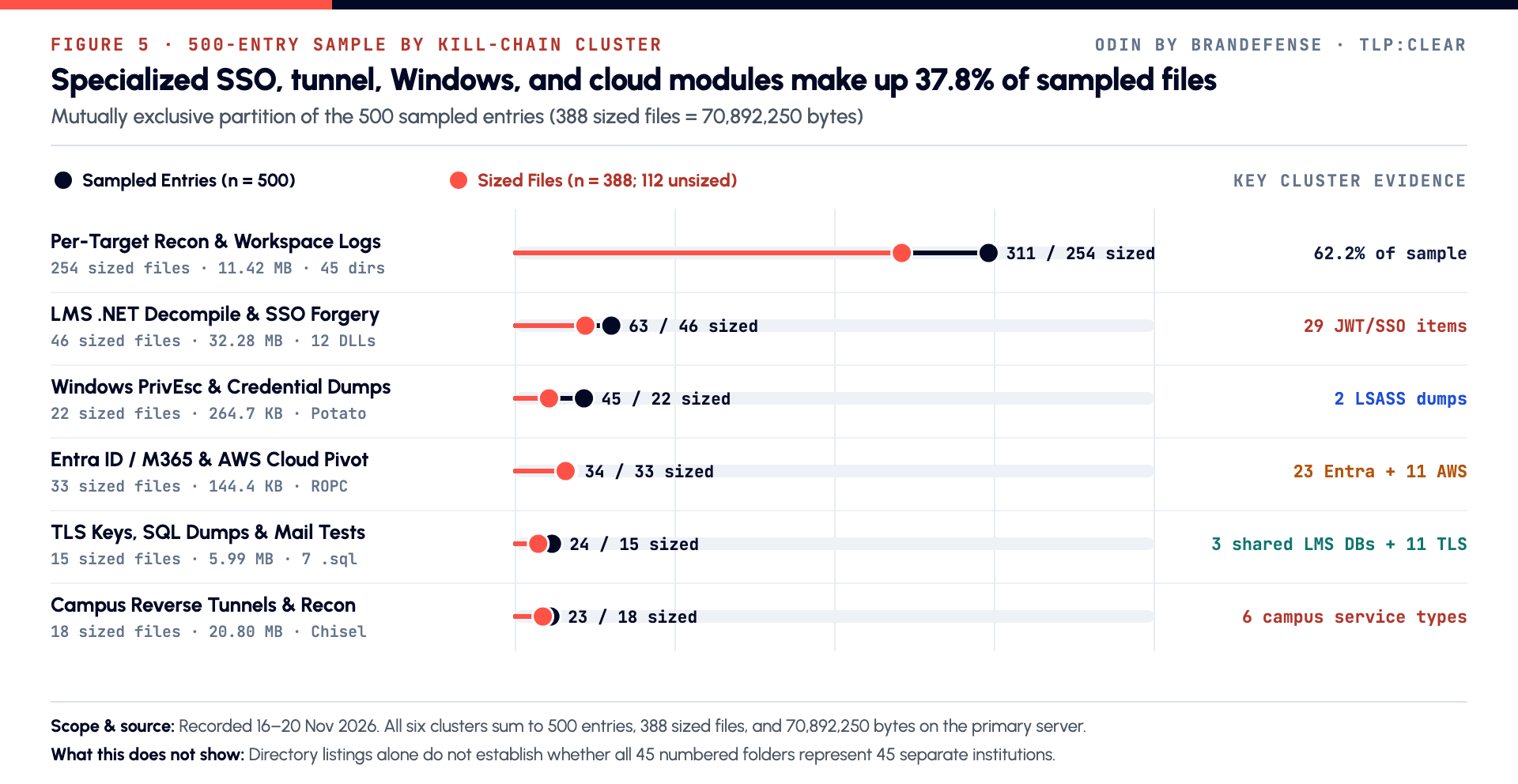
| Kill-chain cluster in 500-entry sample | Entries | Sized bytes | Verified operational artifacts |
|---|---|---|---|
LMS .NET Decompile & SSO Forgery | 63 | 32,278,804 | 12 .NET .dll files disassembled to IL; 29 RSA/JWT SSO handoff forgery items. |
| Campus Reverse Tunnels & Recon | 23 | 20,798,257 | 16 Nov 2026 live chisel log forwarding 6 campus service types (1433, 445, 3389, 5985/5986, 21, 2383). |
| Entra ID / M365 & AWS Cloud Pivot | 34 | 144,360 | 23 Entra (grant_type=password ROPC + Graph role/password scripts) and 11 AWS (STS, S3, Transcribe) items. |
| Windows PrivEsc & Credential Dumps | 45 | 264,679 | 2 LSASS memory dumps across separate folders, GodPotato, PrintSpoofer, and cracking logs. |
| TLS Keys, SQL Dumps & Mail Tests | 24 | 5,990,594 | 7 .sql dumps (3 target folders sharing one LMS schema), 11 TLS/PFX files, and mail tests. |
| Per-Target Recon & Workspace Logs | 311 | 11,415,556 | Co-hosted with ARTEX console (TCP 8787); HTTP scoping and target session logs. |
How do the LMS forgery scripts, campus tunnel log, and Entra ID items fit together?
Three artifact groups in the sample span public campus portals, an internal Windows tunnel log, and staged cloud identity scripts. Each group targets a distinct layer of the campus stack:
- Disassembly and SSO forgery: The operator disassembled 12
.NET.dllfiles into Intermediate Language and built 29 RSA/JWT forgery items (RS256andalg:none). Three separate target folders hold SQL dumps of that identical LMS schema, supporting reuse of the same LMS product across targets. - Live
chiselreverse tunnels: On16 November 2026(21:36), achiselserver log recorded active WebSocket tunnels from a South Korean academic network. Those tunnels forwarded six internal service types:MSSQL (1433),SMB (445),RDP (3389),WinRM (5985/5986),FTP (21), andSSAS (2383). - LSASS dumps and Entra
ROPCscripts: The workbench heldGodPotato,PrintSpoofer, two LSASS memory dumps, and 11 TLS/PFX files. Separately, 23 Entra ID items contained password-grant and Graph scripts targetinglogin.microsoftonline[.]comandgraph.microsoft[.]comdirectoryRolesandpasswordProfileendpoints. Another 11 scripts targeted AWSSTS,S3, andTranscribeAPIs.
What should universities and EdTech teams do first?
Campus defenders and software teams can break each layer of this tradecraft with three priority actions. These steps address portal signing keys, cloud sign-in rules, and server network boundaries:
- Re-key LMS SSO handoff bridges per campus: Replace shared or vendor-default signing keys with unique per-campus RSA or ECDSA keys. Allowlist
RS256orES256only, rejectalg:none, validateissandaud, and cap handoff token lifetimes at 60 seconds. - Block Entra
ROPCand static AWS keys: Require MFA for relevant Entra users and apps so ROPC requests fail. Block legacy authentication separately and migrate approved ROPC clients. Alert on scripted Python or PowerShell calls to Microsoft GraphdirectoryRolesandpasswordProfile. Replace static AWS keys on lecture-caption servers with IAM roles. - Isolate e-learning servers and monitor
chiseltunnels: Move LMS servers into DMZ VLANs blocked from initiating internal 1433, 445, 3389, 5985, 21, or 2383 connections. Enable LSA Protection (RunAsPPL) and Credential Guard, and mark TLS private keys non-exportable. Enforce proxy egress blocks and deploy Suricatasid:9555001andsid:9555003-9555008.
What is…?
Short explanations of the tools and families named in this study.
What is ARTEX?
ARTEX is an autonomous red-team console that chains AI agents and security tools. Operators fork and rebrand it; its default listener port is 8787.
More about ARTEXOffensive toolWhat is PrintSpoofer?
PrintSpoofer is a public Windows privilege escalation tool that abuses impersonation privileges to gain SYSTEM.
More about PrintSpooferFrequently asked questions
How was the 6,203-file workbench organized, and why does the timing matter?
On 26 October 2026, South Korean police announced the 15 October arrest of a suspected ringleader accused of using ARTEX across roughly 90 organizations. Police reported 8.2 million stolen records while six suspects stayed under investigation. The CampusKey ARTEX console (16–19 November), live campus tunnel (16 November), and 6,203-file directory (20 November) ran one month after that arrest.
How do the LMS forgery scripts, campus tunnel log, and Entra ID items fit together?
Three artifact groups in the sample span public campus portals, an internal Windows tunnel log, and staged cloud identity scripts. Each group targets a distinct layer of the campus stack:
What should universities and EdTech teams do first?
Campus defenders and software teams can break each layer of this tradecraft with three priority actions. These steps address portal signing keys, cloud sign-in rules, and server network boundaries: