


BlastRADIUS (CVE-2024-3596) is a flaw in the RADIUS protocol that lets an attacker with network access forge server replies. NVD rates it 9.0, critical. The attack uses an MD5 collision to change a reply, such as a rejection into an acceptance. Operators can reduce the risk by requiring the Message-Authenticator attribute and protecting RADIUS traffic with TLS or DTLS.
A newly identified vulnerability (CVE-2024-3596), dubbed “BlastRADIUS,” has been discovered in the RADIUS protocol, posing a critical risk to network security. Researchers from the University of California, San Diego, have published a practical exploit for this flaw, marking the first successful demonstration of an attack against the RADIUS protocol. The FreeRADIUS Server Project has promptly responded with guidance and updates to mitigate this significant threat.
How does the attack on the RADIUS protocol work?
- The attack exploits a fundamental design flaw in the RADIUS protocol.
- All standards-compliant RADIUS clients and servers are likely vulnerable.
- Classified as a Man-in-the-Middle (MITM) attack, it requires the interception and modification of Access-Request packets.
How can you mitigate BlastRADIUS?
The FreeRADIUS Server Project has provided the following recommendations to secure systems:
Immediate Configuration Changes
- Enable
require_message_authenticator = truein all client definitions. - This flag has been available since version 3 but was not enabled by default.
- Ensures systems using FreeRADIUS are not vulnerable to the BlastRADIUS attack.
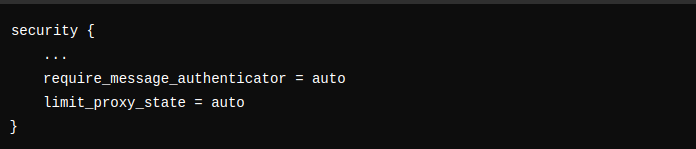
Specific Measures for NAS and Proxy Clients
- For NAS clients (non-proxy devices): Update client definitions to include
limit_proxy_state = yes. - For proxy clients (other RADIUS servers): Ensure the
require_message_authenticatorattribute is present in all Access-Request packets and upgrade other RADIUS servers to prevent the attack.
Who found BlastRADIUS and who is affected?
The research team behind the attack (Sharon Goldberg, Miro Haller, Nadia Heninger, Mike Milano, Dan Shumow, Marc Stevens and Adam Suhl) published it on blastradius.fail and presented it at USENIX Security 2024. Disclosure was coordinated by CERT/CC. The researchers say all RADIUS implementations that use non-EAP authentication methods over UDP are affected, and that this covers enterprise networks, VPNs, ISPs, Wi-Fi authentication, cellular systems and access control for critical infrastructure.
The attacker has to sit between the RADIUS client and the server. From there, the attack combines a flaw in how the protocol checks replies with an MD5 collision, and can turn a rejection into an acceptance. The researchers estimate that it takes 3 to 6 minutes with current resources, and could be faster with specialized hardware. The NVD record scores it 9.0 with a high attack complexity, which reflects the need for the man-in-the-middle position. The weakness is listed as CWE-354, a missing integrity check.
What is the long-term fix?
The short-term control is to require the Message-Authenticator attribute on every packet, which vendors have started to enforce, including placing it first in server replies. The long-term fix is to stop sending RADIUS over plain UDP and move to RADIUS over TLS or DTLS, so the traffic no longer depends on MD5 for protection.
- List every RADIUS server, client, proxy and network deviceInclude VPN gateways and Wi-Fi controllers.
- Install vendor updates that enforce Message-AuthenticatorApply them to servers and clients.
- Set require_message_authenticator on FreeRADIUS clientsAdd limit_proxy_state for non-proxy network devices.
- Keep RADIUS traffic off untrusted network segmentsThe attack needs a position between client and server.
- Plan the move to RADIUS over TLS or DTLSThis removes the dependence on MD5.
Conclusion
The discovery of CVE-2024-3596 underscores the importance of diligent cybersecurity practices and the necessity of safeguarding and continuously monitoring systems. Organizations must act promptly to patch vulnerable systems and strengthen their security posture to mitigate the risks associated with this severe vulnerability.
Recommendations
While the BlastRADIUS vulnerability (CVE-2024-3596) requires a man-in-the-middle position, implying a network may already be compromised if exploited, immediate action is crucial. FreeRADIUS users are advised to implement the recommended configuration changes and stay updated with the latest security guidance to protect their networks.