


Cyber threat intelligence (CTI) is the collection, analysis and use of data about current and new threats against a company. It helps the company anticipate attacks and prepare its defenses. It comes in three types: tactical, operational and strategic. This guide explains each type, why it matters, three real incidents, and the five steps of the CTI process.
In today’s fast-paced digital world, the survival of your business can hinge on one key factor: cybersecurity. Cyberattacks are getting more advanced, and traditional defense methods are no longer enough. This is where Cyber Threat Intelligence (CTI) steps in. CTI gives actionable insight into the tactics, techniques and procedures of malicious actors. It can mean the difference between a minor security incident and a catastrophic breach. But what exactly is Cyber Threat Intelligence, and how can it save your business from falling prey to cybercriminals?
This blog explores how CTI works and why it matters for modern firms. It also shows how platforms like Brandefense can protect your business from the changing cyber threat landscape.
What Is Cyber Threat Intelligence?
At its core, Cyber Threat Intelligence is the collection, analysis and use of data about current and new threats to a company’s digital ecosystem. Traditional cybersecurity is reactive. CTI is proactive. It helps companies anticipate possible cyber threats before they materialize. This lets firms bolster their defenses, reduce vulnerabilities and prepare effective incident response plans.
CTI is often categorized into three main types:
Tactical Threat Intelligence
This type of intelligence focuses on the tools, techniques and procedures (TTPs) of specific threat actors. By reviewing the patterns and behaviors of attackers, companies can strengthen their security measures against known threats.
- Purpose: Focuses on the attackers’ tactics, techniques, and procedures (TTPs) to give a detailed view of how attacks are likely to occur.
- Content: Explains specific attack methods, tools used by hackers and behavioral patterns.
- Usage: Helps security teams set up specific countermeasures. Examples are configuring firewalls, deploying endpoint protection or running incident response exercises.
- Sources: Incident reports, malware analysis, and cyber threat frameworks (like MITRE ATT&CK).
Tactical Threat Intelligence solves the issue of security teams not fully understanding how cyber attackers work. This often results in weak defenses against specific attack techniques. Brandefense gives detailed insight into the tactics, techniques and procedures (TTPs) of attackers. This helps security teams build targeted defenses against common attack methods such as phishing, malware or ransomware.
Operational Threat Intelligence
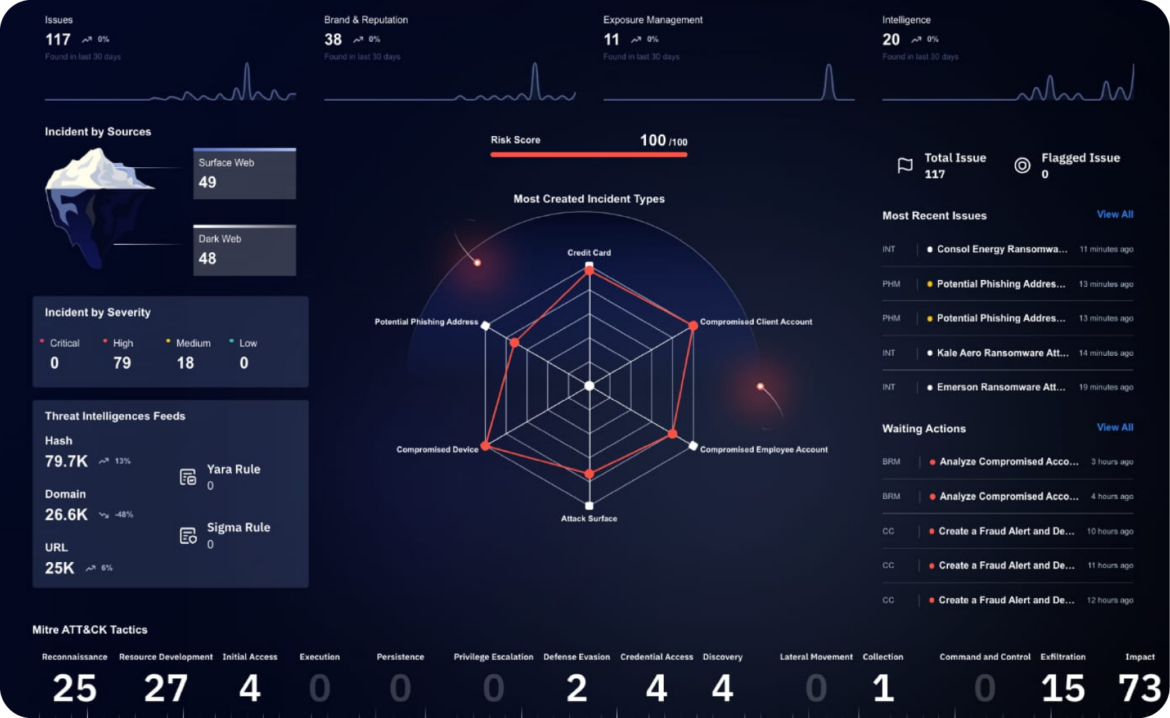
Operational threat intelligence gives insight into specific cyberattacks or campaigns that target a company. It provides real-time data on who is targeting your business, their methods and how to defend against them.
- Purpose: Provides insights into cyber threats that are now in play or imminent. It delivers actionable data about planned or ongoing attacks.
- Content: Includes details on attack campaigns, botnet activity, phishing attacks and malware distribution.
- Usage: Helps companies anticipate and reduce active threats in real time. They adjust security measures and defenses to match.
- Sources: Data from dark web monitoring, open-source intelligence (OSINT), and active threat feeds
Operational Threat Intelligence tackles the problem of slow responses to real-time threats. Without real-time monitoring, companies are open to active cyberattacks. Brandefense provides real-time threat detection and alerts. Security teams can respond at once to ongoing threats, such as phishing campaigns or botnet activity. This limits possible damage.
Strategic Threat Intelligence
This high-level intelligence focuses on long-term trends in cybersecurity. It helps decision-makers understand the broader cyber threat landscape and align their security plans to match. It is especially useful for C-suite executives and security leaders when they make budget and policy decisions.
- Purpose: Provides high-level insights into the overall threat landscape, trends, and long-term risks. This type of intelligence is intended for senior leadership and decision-makers.
- Content: Includes geopolitical trends, motives of attackers, the possible impact of cyber threats on the business, and future predictions.
- Usage: Helps companies align their cybersecurity plans with business goals. It also informs long-term planning.
- Sources: Government reports, security research and industry white papers
Strategic Threat Intelligence addresses the problem of companies lacking long-term awareness of new threats and cyber risks. Without this understanding, companies often fail to adapt their security plans. Brandefense solves this with high-level insight into global threat trends. Firms can then align their cybersecurity plans with possible future risks. This supports long-term protection and resilience.
| Topic | Tactical | Operational | Strategic |
|---|---|---|---|
| Focus | Attackers’ tactics, techniques and procedures (TTPs) | Specific attacks or campaigns against a company | Long-term trends in the threat landscape |
| Main use | Specific countermeasures such as firewall settings and incident response exercises | Anticipating and reducing active threats in real time | Aligning security plan with business goals and long-term planning |
| Sources | Incident reports, malware analysis, frameworks like MITRE ATT&CK | Dark web monitoring, OSINT, active threat feeds | Government reports, security research, industry white papers |
Why Is Cyber Threat Intelligence Critical for Your Business?
Cyber Threat Intelligence is not just another buzzword; it’s a key tool in modern cybersecurity. Here’s why:
Proactive Defense
Traditional cybersecurity tools often operate in a reactive mode, responding to threats after they occur. CTI flips this model on its head by enabling firms to anticipate attacks before they happen. With advanced threat intelligence, you can stay one step ahead of cybercriminals by finding vulnerabilities in your systems before they are exploited.
Limit Financial and Reputational Damage
The financial and reputational costs of a cyberattack can be devastating. This kind of financial hit could be impossible for smaller firms to recover from. By using CTI to prevent breaches or reduce their impact, you can avoid the costly consequences of a successful attack.
Improve Incident Response
How quickly and effectively you respond can make all the difference when a breach occurs. With CTI, your incident response team will have real-time, actionable intelligence to find the threat, understand its impact, and respond to match. This can drastically reduce the time it takes to contain and eliminate the threat.
Informed Decision-Making
Cybersecurity budgets are finite, so assigning resources where they are needed most is crucial. CTI provides data-driven insight into which assets are most at risk. This allows smarter investments in security measures.
Real-World Examples
Let’s examine some real-world examples of how Cyber Threat Intelligence played an important role in protecting firms.
The SolarWinds Attack
The infamous SolarWinds attack in 2020 was a wake-up call for firms worldwide. Hackers got into the IT management software company. They inserted malicious code into one of its routine software updates. This let the attackers reach the networks of many high-profile companies, including government agencies, critical infrastructure and private sector companies.
The first attack went unnoticed. Still, companies with strong CTI programs detected suspicious activity early. With actionable intelligence, these firms limited the damage and isolated infected systems. They also stopped the attackers from moving laterally within their networks.
The WannaCry Ransomware Attack
In 2017, the world witnessed one of the most widespread ransomware attacks in history:WannaCry. The ransomware infected computers in more than 150 countries. The attackers exploited a vulnerability in Microsoft Windows systems to spread the malware fast.
Companies using CTI received early warnings about the vulnerability and applied the needed patches before the attack occurred. This proactive approach kept ransomware out of their networks. It saved them from major financial and business disruption.
The NotPetya Cyber Attack
NotPetya was another global ransomware attack. It occurred in 2017 and caused massive disruption across industries, from shipping to pharmaceuticals. The attack targeted companies that used accounting software in Ukraine, but its impact spread worldwide.
Companies that had set up CTI could detect anomalous network activity as the attack unfolded. This let them shut down infected systems and prevent further damage. By relying on real-time intelligence, these firms were able to contain the attack quickly and limit the fallout.
- 2017WannaCry ransomwareSpread through a vulnerability in Microsoft Windows systems.
- 2017NotPetyaGlobal ransomware attack that targeted companies using accounting software in Ukraine.
- 2020SolarWindsMalicious code inserted into a routine software update.
How Does Cyber Threat Intelligence Work?
So, how exactly does CTI work? Let’s break down the process:
Data Collection
The first step in the CTI process is gathering data from many sources. These include open-source intelligence (OSINT), proprietary threat databases, social media, and dark web forums. This data provides insights into new threats, malicious actors, and ongoing cyber campaigns.
Analysis
Once the data is collected, it’s analyzed to find patterns, correlations, and anomalies. This is where the magic happens. Advanced algorithms and machine learning tools can sift through massive amounts of data. They uncover insights that would be impossible to detect manually.
Contextualization
Raw data alone is not enough to protect your business. CTI involves contextualizing the data to make it actionable. This means understanding the who, what, why, and how behind a cyber threat. For example, you may learn that a known threat actor targeting your industry uses a specific type of malware. You can then prepare a targeted defense.
Dissemination
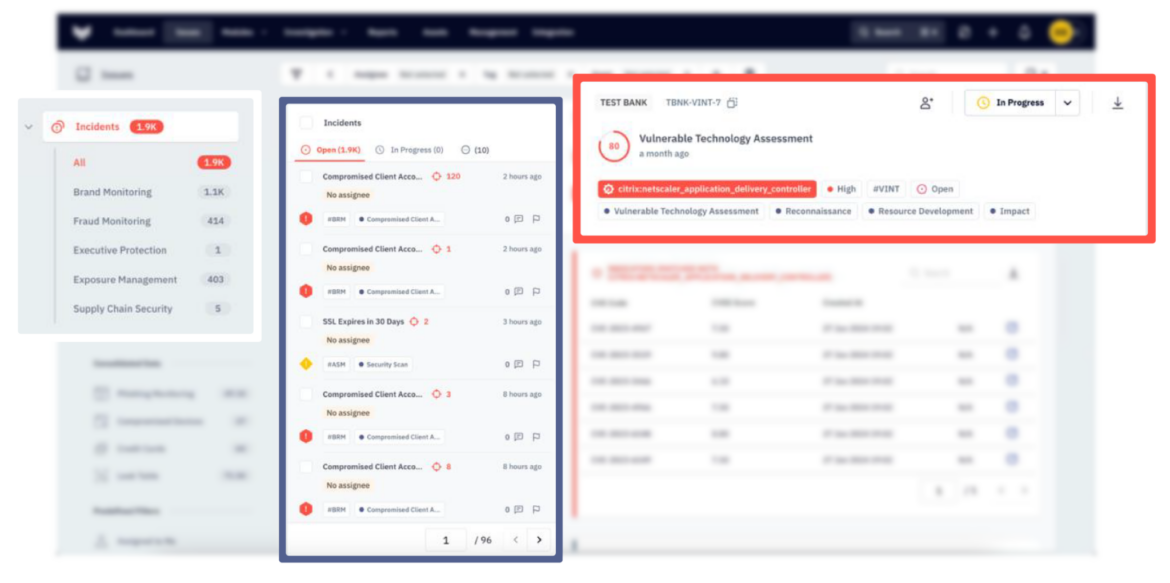
Once the intelligence has been analyzed and put in context, it’s shared with the right stakeholders. These include security teams, C-suite executives and third-party partners. This makes sure everyone involved in your company’s cybersecurity work has the data they need to act.
Action
The final step is to take action. This could involve patching vulnerabilities, updating security policies, deploying new defensive measures, or launching an incident response plan. The key is to act on the intelligence quickly before the threat can escalate.
- Data collectionGather data from open sources, threat databases, social media and dark web forums.
- AnalysisFind patterns, correlations and anomalies in the data.
- ContextualizationWork out the who, what, why and how behind a threat.
- DisseminationShare the intelligence with security teams, executives and partners.
- ActionPatch vulnerabilities, update policies, deploy defenses or launch incident response.
Key Benefits of Using Brandefense for CTI
Now that we’ve covered the basics of CTI, let’s explore how Brandefense can help your business use threat intelligence. It helps you stay secure in an increasingly dangerous digital landscape.
360° Visibility
Brandefense offers full visibility into your company’s attack surface. It gives real-time intelligence on threats that target your business. Our platform scans the surface, deep and dark web. It finds vulnerabilities and possible attack vectors before they can be exploited.
AI-Driven Threat Detection
Brandefense uses advanced AI algorithms to detect new threats and give real-time actionable insight. Our platform monitors new threats and updates its database. This keeps you ahead of cybercriminals.
Customized Threat Intelligence
Not all firms face the same cyber threats. Brandefense tailors its CTI tools to meet your company’s specific needs. Whether you’re a small business or a multinational corporation, we’ll help you find the most relevant threats. We then help you build a customized defense plan.
False Positive Elimination
One of the biggest challenges in cybersecurity is the overwhelming number of false positives from security systems. Brandefense eliminates false positives with highly accurate intelligence. This lets your security teams focus on genuine threats.
Constant Monitoring
Cyber threats are constantly changing, and so should your defenses. Brandefense provides constant monitoring to make sure that your business is protected 24/7. Our platform finds new vulnerabilities, tracks changes in the threat landscape, and alerts you to potential risks in real-time.
Conclusion: The Future of Cyber Threat Intelligence
As cyber threats evolve, firms can no longer afford to rely on outdated security measures. Cyber Threat Intelligence is the key to staying ahead of cybercriminals and protecting your business from costly breaches.
The future of cyber threat intelligence will be defined by advanced AI, machine learning, and automated response systems. These systems can find and neutralize threats in real time. The rise of quantum computing will further challenge traditional encryption methods, making quantum-resistant security crucial.
Cross-industry collaboration, threat-sharing platforms and decentralized intelligence networks will be critical in anticipating new attack vectors. Companies will need to embrace predictive analytics and behavioral threat modeling to stay one step ahead. Legal bodies will push for stricter data privacy and cybersecurity laws. The future will demand a shift from reactive to proactive threat defense plans. This will change how we secure the digital world.
Related guide: Threat Intelligence Evaluation Checklist