
News Explainer
What Is Credential Stuffing? How the Attack Works and How to Stop It
Credential stuffing explained: how attackers test real stolen username and password pairs across services, where the lists come from, and how to detect it.
Blog · 535 Articles
Threat actors, dark web activity, ransomware and digital risk, explained by the analysts who track them.
02 All Articles
News Explainer
Credential stuffing explained: how attackers test real stolen username and password pairs across services, where the lists come from, and how to detect it.

Ransomware
Triple extortion ransomware is reshaping cyber threats. Discover how attackers operate and how to detect threats before encryption begins.

DRPS Articles
Session hijacking allows attackers to bypass MFA by stealing authentication cookies. Discover how it works and how to detect stolen session tokens before exploitation.

DRPS Articles
Fake mobile apps replicate your brand to steal user credentials, financial data, and trust. Discover how attackers build, distribute, and monetize clone apps—and how to stop them early.
APT Group Articles
UAC-0102 is a stealth-focused cyber espionage group targeting Ukrainian government and infrastructure entities using spearphishing and cloud-based C2 techniques.

APT Group Articles
An in-depth analysis of Crazy Evil, a financially motivated cybercrime group targeting Web3, crypto platforms, and digital identities through advanced social engineering and malware campaigns.

DRPS Articles
A massive Komiko AI data breach exposed over 1 million users, including OAuth tokens and session data—creating critical account takeover risks. Here’s what happened and how Brandefense detected it early.
APT Group Articles
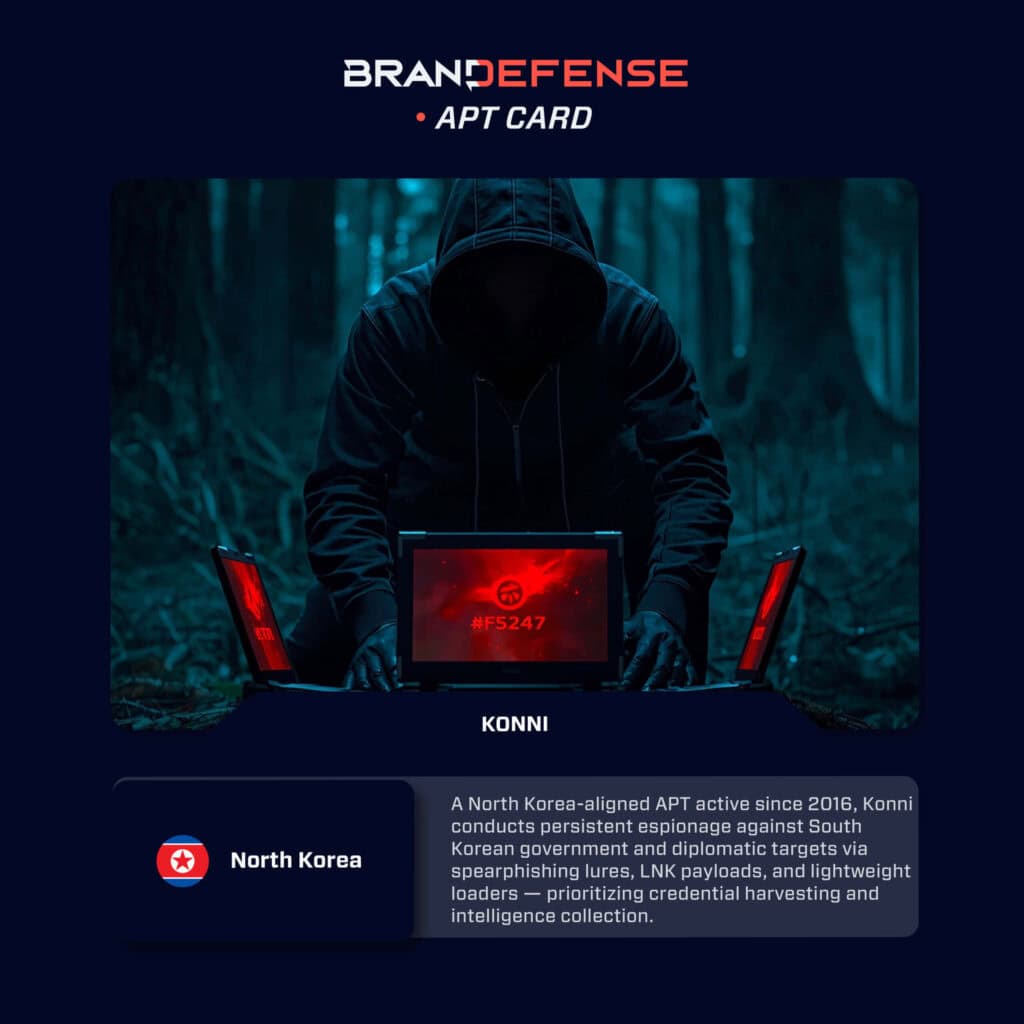
Konni is a North Korea-aligned APT group focused on long-term cyber espionage through spearphishing, credential harvesting, and lightweight malware campaigns.

APT Group Articles
Warlock Group (GOLD SALEM / Storm-2603) is an emerging ransomware actor exploiting SharePoint ToolShell vulnerabilities to target global enterprises with double extortion tactics.
APT Group Articles
DarkHotel is a South Korea-linked APT group known for evolving from hotel Wi-Fi attacks to sophisticated supply chain and cloud-based espionage operations.
APT Group Articles
Kasablanka is an emerging cyber threat actor suspected to originate from North Africa. Active since 2021, the group evolved from hacktivism to phishing-driven espionage campaigns targeting governments, energy companies, and media organizations across Europe and the…

DRPS Articles
What does your organization look like from the outside? An Attacker’s-Eye View reveals exposed assets, forgotten subdomains, misconfigurations, and threat intelligence signals attackers exploit first.
03 More To Read
VIP Security
How-To Guide
DRPS Articles
Threat Research
Threat Research
Threat Research
05 FAQ
Articles on ransomware, APT groups, the dark web, digital risk protection, fraud, sector analysis and VIP security, written for security teams.
The newest articles appear first, and every article shows its publish date.
Use the topic links above the list to open one topic, or type a word in the search box. Search and topic filters cover the full article collection.
Articles draw on public sources such as CISA advisories, MITRE ATT&CK and ENISA reports. Sources are listed at the end of an article when it cites them.
The site feed at brandefense.io/feed/ lists new posts. The email sign-up box is on the All Resources and Reports pages.
Brandefense is an AI-driven threat intelligence company. Its platform covers cyber threat intelligence, digital risk protection and external attack surface management. You can request a demo from the Request A Demo page.
This collection currently contains 535 public articles. The page shows the total at the top and the count for each topic next to its name. Each article shows its publish date.
The blog describes its articles as explained by the analysts who track threats. They cover threat actors, dark web activity, ransomware and digital risk. The newest articles appear first.
Yes. The Knowledge Hub also holds profiles of threat groups. Use the topic links or article search to explore the coverage.
The surface web is the part of the internet that search engines list. The deep web is content that search engines do not list, such as pages behind a login. The dark web needs special software to reach.

Take control of your digital security with an exclusive demo of our AI-driven threat intelligence platform.