


1. Executive Summary
In short
Odin by Brandefense found an exposed staging server holding 364 attack files. The files were first seen before the window. The files stage a path from a web shell through SQL Server and Oracle databases to Active Directory replication and VMware ESXi probing. A rollback script would disable SQL command execution and delete two temporary admins, but leaves a hidden local admin. Alert on configuration changes and short-lived admin accounts, not only on current state.
The server sat open on the internet with no authentication. It held the operator's scripts, batch files and one captured database output. The files show how the operator planned to move from a perimeter web application to the domain controller and the hypervisor layer. We hold no logs from the targeted network, so every step below is staged capability unless a captured output says otherwise.
Python on the staging server did the heavy work.
Python made up 226 of the 364 files (62.1%). These scripts were written to run from the staging server and handle padding-oracle math, SOCKS5 relays, SSH automation, offline hash cracking and raw LDAP checks. Target-side work used built-in tools instead: 87 PowerShell files (23.9%), 25 shell scripts (6.9%) and 19 Oracle PL/SQL scripts (5.2%).
Staged database and Linux paths aim to bridge the DMZ and Active Directory.
The core workflow targets internal SQL Server instances and an RPC-enabled linked server. Parallel scripts probe an Oracle GIS database, Linux hosts over SSH and an internal web app. At least 96 scripts (26.4%) reference 17 internal RFC1918 addresses across three private subnets, plus one swept /24 range.
The rollback script cleans what posture scans check, and nothing else.
As written, a PowerShell rollback script disables xp_cmdshell and deletes two temporary administrator accounts. It leaves out a local administrator hidden from the Windows sign-in screen, and it leaves web-root staging fragments in place.
Three Decisions for Leaders
- Alert on configuration changes, not only on compliance state. Send SQL Server configuration-change events and short-lived admin account lifecycles to your SIEM. A rolled-back escalation then still triggers an investigation.
- Separate hypervisor and out-of-band management from database networks. Put ESXi, vCenter, HP iLO and storage switches on their own management segment. Use credentials outside Active Directory and restrict port 427.
- Treat database linked-server logins as high-privilege identity trusts. Review SQL Server linked-login mappings with RPC-out enabled, and Oracle Java permissions, on the same schedule as Active Directory domain trusts.
The Study in Numbers
| Number | What it is |
|---|---|
| 364 | Staged scripts and outputs on the server (311 in the root folder, 52 in a project folder, 1 in /loot) |
| About 2 days | Span over which the files were first seen |
| 62.1% | Share of Python files (226 of 364) |
| 96 / 17 | At least 96 scripts (26.4%) reference 17 internal RFC1918 hosts across 3 subnets |
| 1,458 | Files across four comparable staging toolkits (364 here plus 1,094 in three peers) |
| 29 | Representative files with SHA-256 hashes for hunting, across Stages 0 to 8 |
How to use this report.
Security leaders can read Chapter 1 and the attribution limits in Chapter 6. SOC and detection engineers should start with Chapters 3 to 5 and the rules in Chapter 8. Database and VMware administrators can use the checklist in Chapter 7.
2. The Staging Server and Its Toolkit
In short
The 364 files sit on one external staging server in three locations. Most quick experiments live in a flat root folder, while a curated project folder holds the staged domain workflow.
Where the files sit
The staging server's address is withheld, because an authorized red team cannot be ruled out. The operator named the project folder after the target organisation and the date 11 September 2026. Its numbered subfolders carry Chinese names.
| Location | Files | Share | What it holds |
|---|---|---|---|
| Root folder | 311 | 85.4% | Quick-iteration Telerik lab, Oracle PL/SQL, Linux SSH and web file-read scripts |
/loot | 1 | 0.3% | q12.out, a captured Oracle Java compilation and error output |
| Project folder | 52 | 14.3% | 48 files in seven numbered subfolders, 3 batch orchestrators, and 1 extra dcsmb.py revision |
The project subfolders are numbered 01, 02 and 04 to 08. Folder 03 is absent. The names describe each stage.
| Folder | Plain meaning |
|---|---|
| 01 | Entry: web shell on the target's GIS web application |
02_隧道_rtun2 | Tunnel: the rtun2 HTTP-to-TCP relay |
| 04 | Domain identity: domain administrator escalation |
| 05 | DCSync and the domain controller |
06_横向扩展 | Lateral expansion: AD, ESXi and management networks |
07_前期跳板_101_8_55 | Early jump host 10.101.8.55 |
08_未能奏效的尝试 | Failed attempts |
How to read staged files
Three limits apply to everything that follows.
- Files, not activity. The files show intent and tooling. They do not show when, or whether, anything ran on a target.
- Some counts are lower bounds. Working exploit code and plaintext secrets are left out of this report. Counts such as the 96 scripts with internal addresses, or the 21 files with syntax or compilation errors, rest on file descriptions rather than full code.
- Only one file records target contact.
/loot/q12.outholds an OracleORA-29535error and a pre-Java 7ProcessBuilder.redirectOutput(File)compilation error. Everything else is staged capability.
Language split
The operator kept the logic on the staging server rather than dropping compiled implants or Python runtimes on Windows targets. External Python handled cryptography, SOCKS5 multiplexing, PuTTY plink SSH relays and MS-DRSR directory replication. Target-side PowerShell called built-in components: System.Data.SqlClient, certutil.exe, Advapi32.dll and cmd.exe.
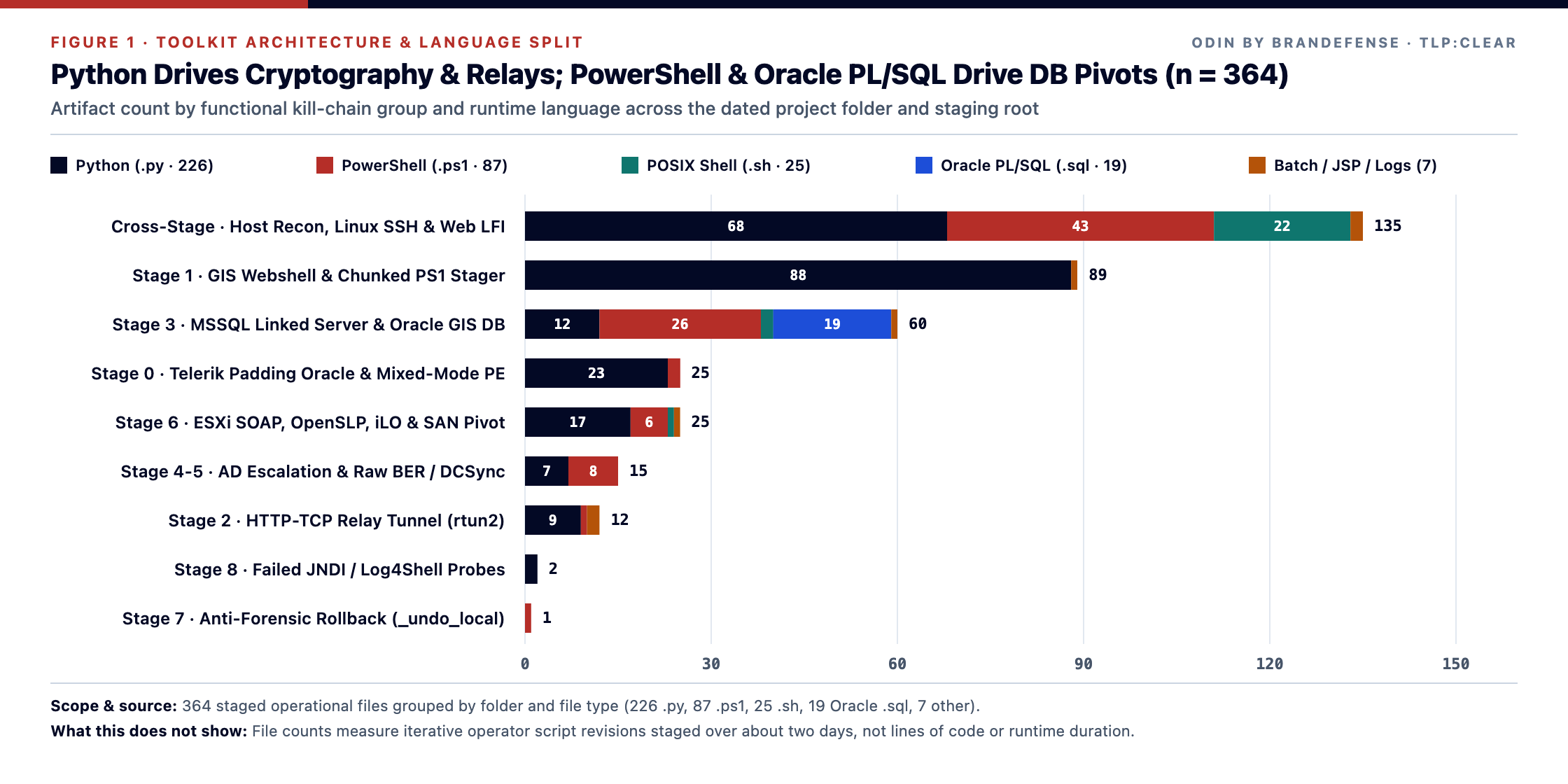
| Language | Files | Share | Mean / median size (bytes) | Size range (bytes) | Main role |
|---|---|---|---|---|---|
Python (.py) | 226 | 62.1% | 2,733 / 1,090 | 334 to 37,822 | Crypto oracles, SOCKS and SSH relays, raw LDAP, DCSync |
PowerShell (.ps1) | 87 | 23.9% | 1,841 / 1,394 | 169 to 7,334 | MSSQL jump-host wrappers, AD user staging, rollback |
Shell (.sh) | 25 | 6.9% | 2,578 / 1,519 | 99 to 10,014 | Linux SSH privilege escalation, NFSv3/v4 droppers, file-read collection |
Oracle PL/SQL (.sql) | 19 | 5.2% | 1,743 / 1,372 | 124 to 4,775 | SQL*Plus Java procedures, DBMS_SCHEDULER, UTL_FILE probes |
Other (.bat, .txt, .jsp, .out, .log) | 7 | 1.9% | 1,698 / 1,219 | 29 to 3,977 | Batch orchestrators, JSP command web shells, captured Oracle output |
3. Perimeter Entry and HTTP Tunneling (Stages 0 to 2)
In short
The workflow targets a Windows GIS web server on a non-standard port. Scripts stage a web shell, chunked file delivery, and an HTTP-to-TCP relay that gives the operator SOCKS5 and port-forward access inside.
The perimeter address, port and application path of the targeted web server are withheld.
A local Telerik lab
The root folder holds 38 files (#001 to #038) outside the project folders. Of these, 25 (23 Python, 2 PowerShell) are Stage 0 padding-oracle and assembly-patching scripts. The other 13 are local lab files.
The script headers cite Progress Telerik UI for ASP.NET AJAX advisories CVE-2026-13181 to CVE-2026-13184 [1]. The vendor lists versions 2010.1.309 to 2026.2.519 as affected and 2026.2.708 as fixed. The scripts point at a local IIS lab (http://127.0.0.1:8090, C:TelerikLab) and build on the older CVE-2019-18935 [2]. In the suite, build_mixedmode.py builds a mixed-mode .NET assembly that can load native code.
None of these 38 scripts names the perimeter target. The project's entry folder and Tomcat helpers (axis/u.jsp, tjsp.jsp) do target a live ASP.NET and Tomcat stack. The lab may have been used to test a payload before delivery, or it may be separate research on a shared server.
Chunked delivery and web shell hygiene
Large HTTP POST bodies and inline PowerShell often trip web application firewalls. The operator staged three workarounds.
- Base64 chunks. Python uploaders slice a
.ps1script into small Base64 fragments prefixed_pushp. They write them into the web application folder orC:WindowsTemp. - GET fallback and markers.
up.pydelivers fragments over HTTP GET when POST connections reset, and reassembles them with PowerShellSet-Content. JSP shells returnGBKoutput prefixedJSPOK|. Background PowerShell launchers poll forPSBG_DONE. - Competing web shell check.
_find_local.ps1scansC:appandC:inetpubfor other web shell names such asu.jsp,tun,shell,behind,godzillaand.war.
The HTTP-to-TCP relay
The operator staged the rtun2 relay with axis/u.jsp and tung2.jsp, plus GBK+CRLF batch generators. This design fits a perimeter firewall that blocks direct inbound connections to internal subnets. It binds three loopback listeners on the staging server.
| Listener | Purpose |
|---|---|
127.0.0.1:1080 (also 11080 in reuse_mssql.py) | SOCKS5 proxy for smbsweep.py, shares.py, depothunt.py, esxiauth.py and dcsync.py |
127.0.0.1:10389 | Forward to domain controller 10.101.8.202 port 389 (LDAP) |
127.0.0.1:10445 | Forward to domain controller 10.101.8.202 port 445 (SMB) |
Key files, Stages 0 to 2
| File | ID | Size (bytes) | Role |
|---|---|---|---|
telerik_oracle_attack.py | #017 | 10,284 | Tests the CVE-2026-13182 RadAsyncUpload padding and JSON-parse error difference |
build_mixedmode.py | #026 | 37,822 | Builds a mixed-mode .NET assembly that loads native code |
dl.py | #039 | 1,927 | Serves Base64 payloads over HTTP (:8081) for certutil retrieval |
psrun.py | #094 | 2,619 | Slices PowerShell into _pushp chunks for the ASP.NET web shell |
B_all.bat | #096 | 497 | Top-level wrapper that calls RUN_ALL.bat |
gx.py | #098 | 1,252 | Web shell command client with retries (later 2,015-byte revision #196) |
sy.py | #108 | 613 | Relays commands to axis/u.jsp and converts GBK output to UTF-8 |
RUN_ALL.bat | #122 | 2,445 | GBK+CRLF pipeline chaining tunnel setup, SQL escalation and DCSync |
_find_local.ps1 | #146 | 460 | Looks for competing web shells |
tjsp.jsp | #169 | 563 | Minimal JSP cmd.exe /c shell returning output prefixed JSPOK | |
hx.py | #172 | 2,020 | Main HTTP client for the perimeter web shell |
up.py | #198 | 2,568 | HTTP GET fragment uploader |
psbg.py | #269 | 4,833 | Background PowerShell launcher polling for PSBG_DONE |
_gen_runall.py | #271 | 3,934 | Generates an updated RUN_ALL.bat |
tunkick2.py | #314 | 1,462 | Redeploys the Tomcat relay JSPs to restore SOCKS workers |
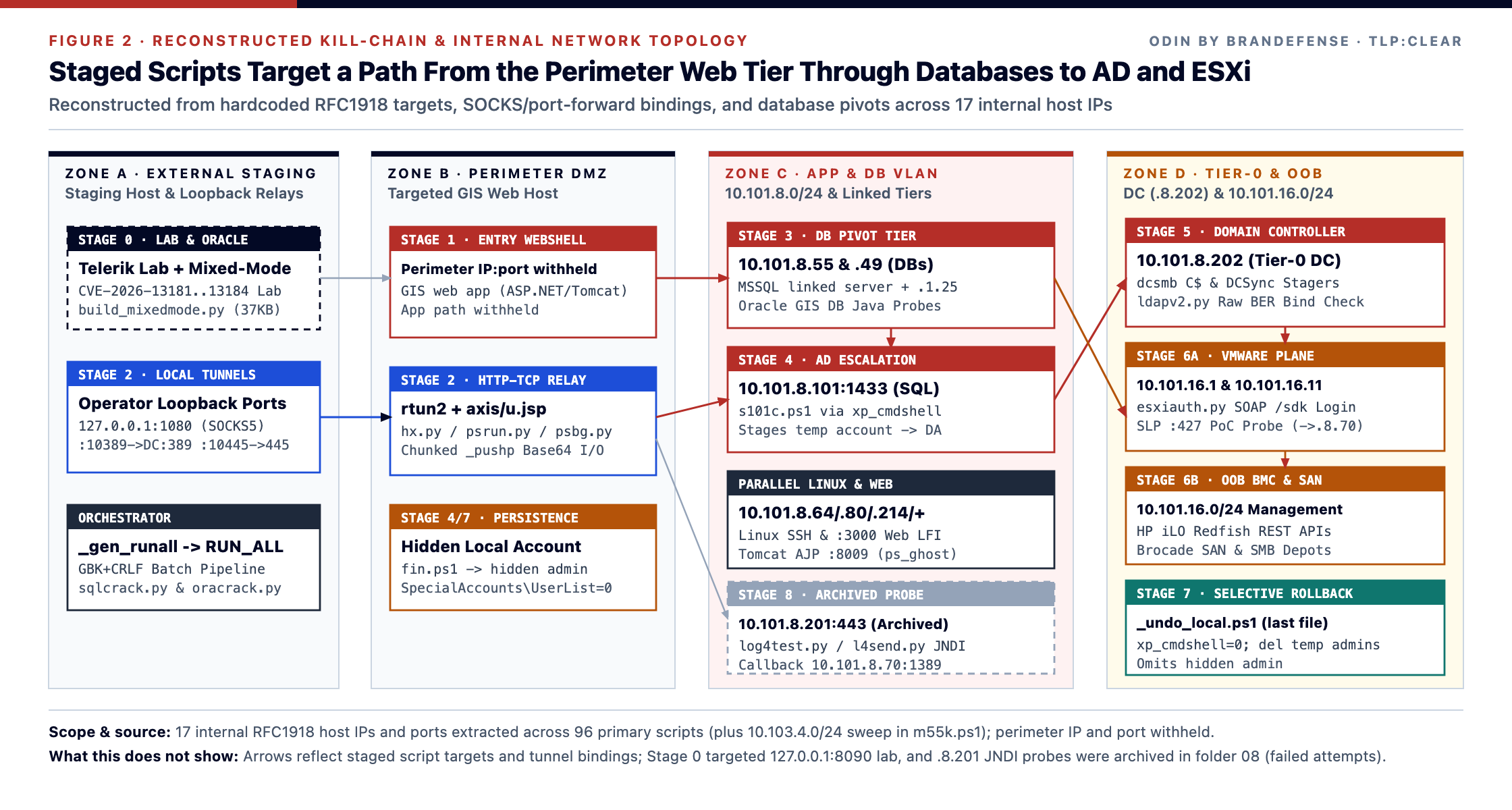
Figure 2 shows the staged path hop by hop, from the staging server through the DMZ and application network to the management plane.
4. Database Pivots, Parallel Tracks and Domain Replication (Stages 3 to 5)
In short
SQL Server jump hosts carry most of the internal movement, with Oracle, Linux and web tracks running in parallel. The workflow then stages temporary admins, a hidden admin, and DCSync scripts against the domain controller.
At least 96 scripts (26.4%) reference 17 internal hosts in 10.101.8.0/24, 10.101.16.0/24 and 192.168.1.25, plus the swept range 10.103.4.0/24. Outcomes on these internal servers are not verified.
SQL Server jump hosts and the linked server
The MSSQL tooling targets SQL Server on 10.101.8.48, 10.101.8.55 and 10.101.8.101 (port 1433). There are no .sql files for MSSQL. The operator used small PowerShell System.Data.SqlClient wrappers instead: 12 jump-host scripts in folders 04 and 07, each 578 to 1,132 bytes. Python pymssql relays (mssql_try.py, reuse_mssql.py, mssql_via_socks.py) complete the set.
- Linked-server traversal. Early scripts list linked-server logins on 10.101.8.55 with
sp_helplinkedsrvlogin. They then use an RPC-enabled linked server. Later wrappers sendOPENQUERYcalls toward 192.168.1.25 (m55dom.ps1) and runxp_cmdshellping and ARP sweeps across 10.103.4.0/24 (m55k.ps1). - Credential queries and offline cracking. Other scripts query
sys.credentials, SQL Agent job steps inmsdb, andsys.sql_loginspassword hashes (0x0100 SHA-1 format). The set also holds an offline cracker,sqlcrack.py, which has an indentation bug.
| File | ID | Size (bytes) | Role against 10.101.8.55 |
|---|---|---|---|
m55g.ps1 | #095 | 769 | Enables linked-server RPC options and runs remote xp_cmdshell |
m55.ps1 | #100 | 734 | Tests SQL sysadmin credential candidates and checks the sysadmin role |
m55h.ps1 | #121 | 638 | Enables xp_cmdshell on the linked server and runs host discovery |
m55adm.ps1 | #156 | 776 | Adds a temporary local admin to Administrators and RDP groups |
m55e.ps1 | #175 | 578 | Runs arp -a and queries the linked server with OPENQUERY |
m55dom.ps1 | #248 | 687 | Queries cross-segment host 192.168.1.25 via OPENQUERY |
m55cred.ps1 | #270 | 641 | Queries sys.credentials and SQL Agent jobs |
m55c.ps1 | #289 | 773 | Reads sys.sql_logins hashes and the sys.servers catalog |
m55b.ps1 | #327 | 802 | Lists server properties, sys.configurations and databases |
sqlcrack.py | #360 | 1,871 | Offline 0x0100 SHA-1 cracker (indentation error) |
Oracle, Linux and internal web tracks
Scripts in the root folder run three parallel tracks across 10.101.8.0/24.
- Oracle Java procedures. All 19
.sqlfiles are OracleSQL*Plusscripts aimed at the target's GIS database on 10.101.8.49, run throughsq.pyandsqrun.py. They grantDBMS_JAVApermissions, compile Java procedures (HrExec,HrRun3,OSExec) and stage Windows registry hive dumps for HTTP PUT upload. The capturedq12.outrecords anORA-29535error from that database. - Registry and SSH harvesting.
hputty2.pyandhssh.pyparseHKEY_USERShives for saved PuTTY, WinSCP, mRemoteNG and SSH sessions. In all, 61 files reference PuTTYplink,pscp, SSH or NFSv3/v4 workflows (rootsudo.py,nfs3.py,nfs4.py). They target six Linux hosts: 10.101.8.49, .64, .72, .103, .107 and .196. - Internal web app and Ghostcat. 103 files have names starting with
ps_gw,gworlfi. Eight of them test/cs/log?filename=directory traversal on 10.101.8.80:3000; the rest are delivery launchers and service probes. Separately, nine scripts target the Apache Tomcat AJP Ghostcat flaw (CVE-2020-1938 [8]) on port 8009, and seven name 10.101.8.214.
| File | ID | Size (bytes) | Role |
|---|---|---|---|
q14.sql | #051 | 3,483 | Java procedure HrExec runs commands and PUTs registry hives to :8080 |
q18.sql | #052 | 3,546 | Java procedure HrRun3 decodes and runs .bat payloads |
q12.out | #161 | 3,161 | Captured output with ORA-29535 and a pre-Java 7 ProcessBuilder error |
q17.sql | #213 | 1,643 | Saves SAM, SYSTEM, SECURITY and SOFTWARE hives through the database |
q10.sql | #238 | 1,203 | Reads command output from C:WindowsTemp with UTL_FILE |
exfil1.ps1 | #272 | 1,091 | PowerShell version that saves SAM, SYSTEM and SECURITY for upload |
mkq18.py | #306 | 4,010 | Rebuilds q18.sql with Base64 batch commands in Java source |
q5.sql | #309 | 1,372 | Lists Oracle password hashes, DB links, scheduler credentials and privileges |
hssh.py | #332 | 1,681 | Searches user folders and registry for SSH keys (syntax bug) |
hputty2.py | #351 | 1,796 | Lists saved PuTTY, WinSCP, mRemoteNG and RDP sessions per user SID |
Two kinds of admin accounts
On SQL Server 10.101.8.101:1433, xp_cmdshell wrappers and root PowerShell scripts set up privileged accounts on two tracks. Account names are withheld.
- Short-lived accounts.
s101c.ps1creates a temporary domain account and adds it toDomain Adminsfor replication.m55adm.ps1adds a temporary local account toAdministratorsandRemote Desktop Users. The rollback script names both for deletion. - A hidden local account. Drafted in
mkuser.ps1andmkuser.pyand finished infin.ps1, this track creates a local administrator. It hides the account from the sign-in screen withHKLMSOFTWAREMicrosoftWindows NTCurrentVersionWinlogonSpecialAccountsUserList[7]. It then checks RDP registry settings and tests an interactive logon withLogonUserfromAdvapi32.dll.
DCSync stagers and raw LDAP bind checks
DCSync abuses the directory replication protocol (MS-DRSR) to request password hashes from a domain controller [4].
- Share access and replication.
dcsmb.pytestsC$share access on 10.101.8.202 over SOCKS5.dcsync.pycalls ImpacketNTDSHashes(IDL_DRSGetNCChanges) through127.0.0.1:1080. The set also holds an updateddcsmb.pyand a rootdcsync.pydraft with an indentation bug. No.ntdsoutput was captured, so hash replication is not verified. - Raw LDAP binds.
dombind.ps1and the dependency-freeldapv2.pytest binds against 10.101.8.202:389. The Python script builds RFC 4511 [10] BERSimpleBindRequestframes by hand (0x30, 0x60, 0x80) over127.0.0.1:10389. A rootdcsmb.pycompares the temporary domain admin with a deliberately wrong password over127.0.0.1:10445.
| File | ID | Size (bytes) | Role |
|---|---|---|---|
sql101.ps1 | #064 | 935 | Tests SQL sysadmin credential candidates on 10.101.8.101, with lockout notes |
s101c.ps1 | #075 | 694 | Creates the temporary domain admin via xp_cmdshell |
mkuser.ps1 | #101 | 1,737 | First ADSI draft of the hidden local admin |
s101.ps1 | #145 | 781 | Enables xp_cmdshell and lists domain users and services |
sql101b.ps1 | #214 | 1,132 | Host and domain group enumeration via xp_cmdshell |
dcsmb.py | #256 | 1,432 | Extra revision testing C$ on the DC via SOCKS5 |
dcsync.py | #288 | 3,452 | Project DCSync stager using Impacket NTDSHashes |
dcsmb.py | #295 | 1,641 | Updated C$ readability check on the DC |
dcsync.py | #299 | 1,204 | Minimal root draft over 127.0.0.1:1080 (indentation bug) |
dombind.ps1 | #326 | 715 | PowerShell LDAP bind tester |
ldapv2.py | #335 | 1,070 | Raw BER SimpleBindRequest tester |
dcsmb.py | #339 | 897 | Differential SMB check against a wrong-password control |
fin.ps1 | #347 | 2,248 | Hides the local admin under SpecialAccountsUserList and tests LogonUser |
5. Hypervisor Probing, Dead Ends and Selective Rollback (Stages 6 to 8)
In short
Alongside the AD work, scripts target the VMware and out-of-band management network. The last files are a rollback script that reverts what a posture scan would check and leaves a hidden admin behind.
Toward virtualization and out-of-band management
Scripts in folder 06_横向扩展 target 10.101.16.0/24, which holds VMware and hardware management interfaces.
- AD and SYSVOL harvesting.
adrecon.pyqueries LDAP over SOCKS5 for LAPS passwords (ms-Mcs-AdmPwd), Kerberoastable SPNs, AS-REP roastable accounts andadminCount=1members.smbsweep.pyscans SYSVOL policies for Group Policy Preferencescpasswordstrings. - Passive ESXi build discovery.
depothunt.pyandshares.pysearch SMB shares for VMware offline depot.zipfiles,.vibpackages,.isoimages andid_rsakeys. Theslpdandlibcbinaries inside a depot reveal the ESXi patch level without touching the host. - Credential tests on management interfaces.
esxiauth.pytests ESXi/sdkSOAP logins (RetrieveServiceContent, thensessionManager).creds16.ps1andcreds16b.ps1test credentials with lockout-aware delays across ESXi, HP iLO Redfish, Cisco and Brocade SAN switches. - vCenter and OpenSLP.
vprobe.pyprobes 10.101.16.11 on ports 443, 5480, 9443 and TCP 427 (slpd).slpctl.ps1sends Service Location Protocol packets to 10.101.16.1. In06_横向扩展/poc/,exp_leak.pyandexp15160138.pyadapt a public PoC for the OpenSLP heap overflow CVE-2021-21974 (VMSA-2021-0002 [3]). They point a reverse shell at 10.101.8.70:32222, served byrshandler.py. The files do not show whether 10.101.16.1 was unpatched or reached.
Documented dead ends
Folder 08_未能奏效的尝试 ("failed attempts") holds two Log4Shell (CVE-2021-44228 [9]) probes.
- External callback.
log4test.pysends JNDI strings, including one in a POST XML username field, over SOCKS5 TLS to 10.101.8.201:443. It points the callback at a commercial out-of-band testing domain. - Internal callback.
l4send.py(a later file) retries with a callback to an internal listener on 10.101.8.70:1389 (l4listen.ps1). Filing both under "failed attempts" suggests the operator gave up on this vector.
The selective rollback
_undo_local.ps1 is the rollback script. It connects to the SQL jump hosts, sets xp_cmdshell back to 0, and deletes the two temporary admin accounts.
| File | ID | Size (bytes) | Role |
|---|---|---|---|
creds16.ps1 | #040 | 6,168 | Rate-limited credential tester for ESXi, HP iLO, Cisco and Brocade |
rshandler.py | #056 | 4,600 | File-driven reverse-shell listener (cmd.txt, shell_out.txt) |
smbsweep.py | #057 | 14,155 | SMB scanner and SYSVOL cpassword decryptor |
l4listen.ps1 | #099 | 531 | Temporary TCP 1389 callback listener |
vprobe.py | #174 | 9,150 | Probes vCenter ports and the TCP 427 OpenSLP precondition |
adrecon.py | #195 | 12,301 | ldap3 harvester for LAPS, SPNs and adminCount=1 |
shares.py | #197 | 6,201 | SMB share search for .iso, .vib, password files and id_rsa |
slpctl.ps1 | #221 | 6,082 | Positive and negative SLP control packets to 10.101.16.1 to .4 |
creds16b.ps1 | #241 | 7,264 | Refined SOAP, Redfish and HTTP Basic credential tester |
depothunt.py | #242 | 5,772 | Finds ESXi offline depots to extract slpd and libc |
poc/exp15160138.py | #257 | 19,461 | Modified public CVE-2021-21974 PoC for ESXi build 15160138 |
poc/exp_leak.py | #258 | 20,265 | Modified public CVE-2021-21974 leak and RCE script |
esxiauth.py | #296 | 7,545 | ESXi /sdk SOAP login tester |
remote_syscheck.txt | #297 | 1,219 | Base64 JSP cmd.exe /c servlet with a red-team deployment and rollback comment |
log4test.py | #311 | 1,696 | Archived JNDI probe |
l4send.py | #338 | 1,010 | Archived JNDI retry with internal callback |
_undo_local.ps1 | #359 | 2,666 | Disables xp_cmdshell and deletes both temporary admins |
sptest.py | #364 | 454 | SMB password-spraying and pass-the-hash wrapper |
What a posture scan would miss
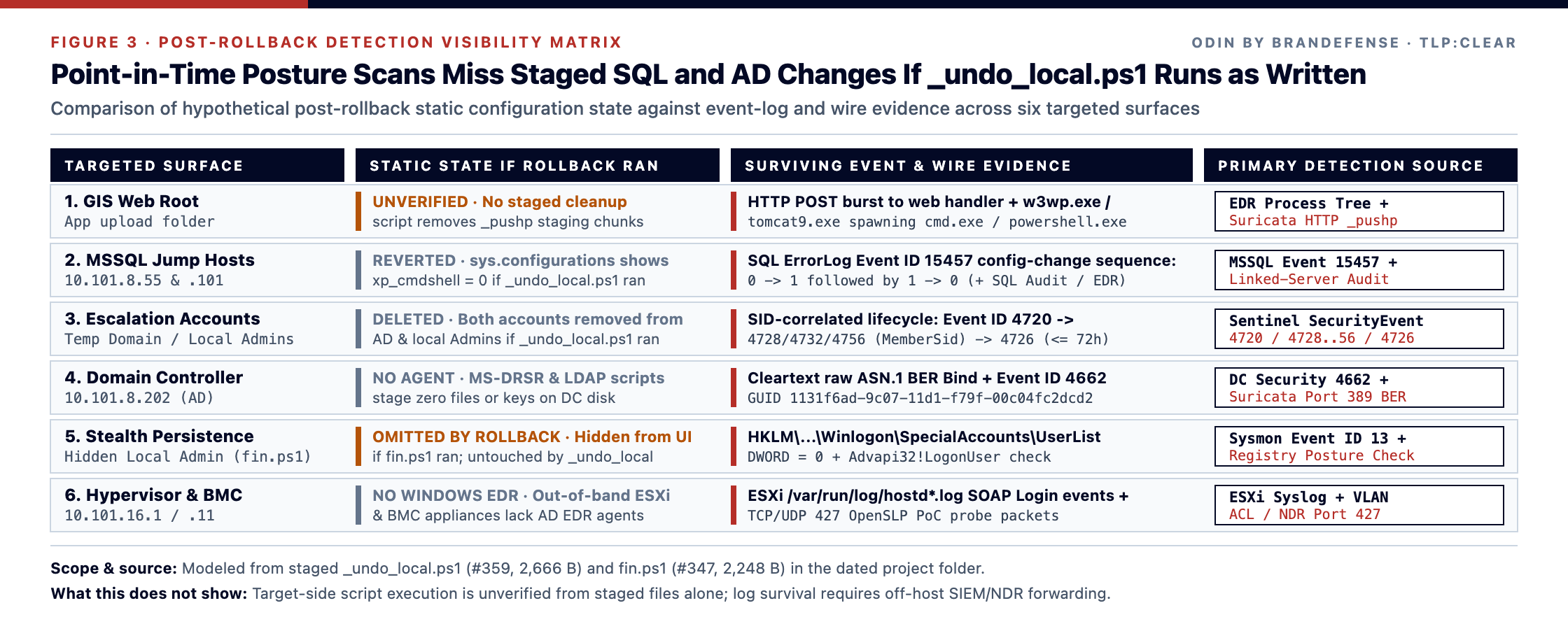
Figure 3 models what happens if _undo_local.ps1 and fin.ps1 run as written.
- What looks clean.
sys.configurationsshowsxp_cmdshell = 0on the jump hosts.Domain Adminsand localAdministratorsno longer list the temporary accounts. - What survives. No staged cleanup script removes the
_pushpfragments in the web folder. The hidden local admin fromfin.ps1is not in the rollback. DCSync and raw LDAP operations against 10.101.8.202 write no files to the domain controller, so only event logs and network records keep a trace.
6. Peer Toolkits and Alternative Explanations
In short
Three other staging toolkits from the same period share the same shape: a flat working folder, curated subfolders, and an application-layer relay into internal data stores. The files cannot tell a hostile intrusion from a red-team test, a lab or a decoy.
Four staging toolkits compared
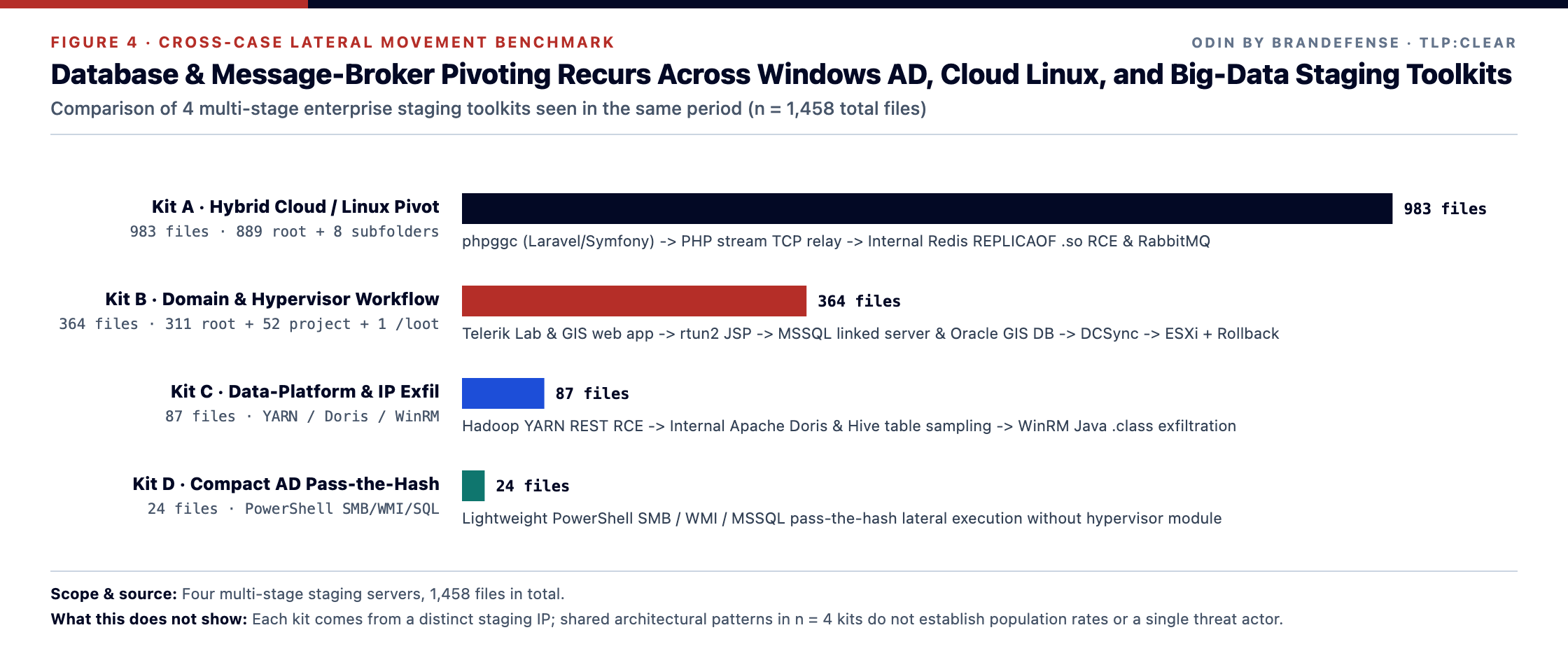
We compared this toolkit (Kit B) with three other multi-stage staging servers seen in the same period. Together they hold 1,458 files.
| Kit | Files | Layout | Staged path |
|---|---|---|---|
| Kit A | 983 | 889 in root, 94 in 8 subfolders | phpggc Laravel and Symfony deserialization, PHP stream TCP relay, internal Redis REPLICAOF .so RCE and RabbitMQ |
| Kit B (this report) | 364 | 311 in root, 52 in project folder, 1 in /loot | Telerik lab and GIS web shell, rtun2 JSP relay, MSSQL linked server and Oracle GIS database, DCSync and ESXi probes, rollback |
| Kit C | 87 | 87 in root | Unauthenticated Hadoop YARN REST RCE, internal Apache Doris and Hive sampling, WinRM Java .class exfiltration |
| Kit D | 24 | 24 in root | Local WCF and SQL credential extraction, PowerShell SMB, WMI and MSSQL pass-the-hash |
Two patterns repeat across Windows AD, Linux cloud and big-data targets.
- Flat root plus curated subfolders. Operators iterate in the root folder (85.4% of files in Kit B, 90.4% in Kit A). They move repeatable chains into subfolders (the project folder in Kit B;
bundleandchainsin Kit A). - Application-layer relays into data stores. JSP and ASP.NET chunked relays in Kit B mirror PHP stream-socket relays in Kit A. Each kit pivots through high-trust data stores: MSSQL and Oracle (B), Redis and RabbitMQ (A), Hadoop YARN, Doris and Hive (C), and MSSQL (D).
Four kits are too few to estimate how common these patterns are, and nothing here links the kits to one actor.
Who is behind it: four hypotheses
Several clues point in different directions. The file remote_syscheck.txt carries a red-team deployment and rollback comment. Folder 08 archives failed attempts. Kit A holds a probable tester account and cleanup scripts. The 38 root-folder files target a local lab, and the ESXi folder adapts public exploit code.
| Hypothesis | For | Against |
|---|---|---|
| Hostile or gray-hat intrusion | The rollback leaves the hidden admin in place. Scripts target an enterprise GIS schema, a linked server and 17 internal hosts. The modified OpenSLP PoCs could crash ESXi slpd. | No victim-side EDR, SIEM or flow data confirms entry, hash replication or impact on a live network. |
| Authorized red team or contractor | The red-team comment in remote_syscheck.txt, numbered stage folders, RUN_ALL.bat automation, commercial out-of-band testing, lockout-aware delays, negative SLP controls and tester markers in Kit A. | Leaving 364 scripts and internal topology on an open server breaks assessment OPSEC. The rollback also omits the hidden admin. |
| Research lab or reused open-source fixture | The 38 root-folder files (10.4%) target a local IIS lab. The ESXi PoCs are public. 21 drafts have syntax or compilation errors, typical of iterative testing. | Later revisions name 17 internal hosts, GIS schemas, and an ORA-29535 output from a pre-Java 7 Oracle JVM. A stock fixture would not hold these unless run against a custom range. |
| Honeypot or decoy server | All four kits sat on open HTTP workspaces in the same period, a posture some research honeypots use. | Revised file versions, including broken drafts fixed later and GBK-encoded Chinese tooling, reflect active editing, not a static lure. |
Verdict. The staged files cannot settle which explanation is right. We hold no data from the referenced network, so this report does not claim that a real enterprise was breached. The conclusions cover the workflow mechanics and the controls needed to detect them.
7. What Defenders Should Do
These steps follow the staged workflow from web entry to the domain and the hypervisor, ordered by urgency. The post-rollback checklist at the end of this chapter records who owns each check.
Within 24 hours
- Search endpoints and web folders for the six target-side PowerShell hashes in the Indicators chapter.
- Run a fleet-wide check of
HKLMSOFTWAREMicrosoftWindows NTCurrentVersionWinlogonSpecialAccountsUserListfor hidden accounts. - Check SQL Server error logs for
xp_cmdshellchanging from 0 to 1 and back to 0, using Event ID 15457 across all rotated archives.
Within 72 hours
- Turn on the 72-hour short-lived admin lifecycle query in Sentinel and Defender XDR, including member servers.
- Enable Directory Service Access auditing and a replication-rights SACL on domain controllers, so Event 4662 records DCSync attempts.
- Scan web upload folders and
App_Datafor_pushp,PSBG_DONEandJSPOK|markers.
Within 7 to 30 days
- Upgrade internet-facing Telerik UI for ASP.NET AJAX to 2026.2.708 or later (CVE-2026-13182).
- Audit linked-server logins with RPC-out or data access enabled, and Oracle
DBA_JAVA_POLICYgrants. - Isolate ESXi
/sdk, TCP and UDP 427 (slpd), HP iLO Redfish and SAN interfaces from application and database subnets. Disableslpdwhere VMSA-2021-0002 applies. - Move LDAP simple binds to LDAPS or SASL, and alert on cleartext simple binds to domain controllers.
Post-rollback checklist
Use this checklist in purple-team exercises or web-to-domain intrusion reviews. Fill in the owner and status columns locally.
| Check | Owner | Evidence | Status | Next review |
|---|---|---|---|---|
| Internet-facing Telerik UI assemblies inventoried and at 2026.2.708 or later | ||||
Web upload folders and App_Data scanned with the YARA rules | ||||
SQL Event 15457 history (show advanced options, xp_cmdshell) compared with sys.configurations, SQL Audit and EDR | ||||
Linked-server logins and Oracle DBA_JAVA_POLICY grants audited | ||||
SpecialAccountsUserList checked on every Windows host | ||||
| Short-lived admin lifecycle rules active in Sentinel and Defender XDR | ||||
| DC replication SACL (4662) and port 389 BER rules active | ||||
ESXi /sdk, port 427, HP iLO Redfish and SAN networks isolated |
8. Detection Rules
The full rules are in the Detection rules tab. Each file targets a step of the staged workflow that leaves a trace even after rollback.
| Rule file | What it catches |
|---|---|
sql_linked_server_and_event15457_audit.sql | T-SQL: lists linked servers that allow RPC-out or data access, and finds xp_cmdshell enable-then-disable sequences in error logs while the option is now off |
sentinel_short_lived_admin_lifecycle.kql | Sentinel and Defender XDR: accounts created, added to a privileged group and deleted within 72 hours |
sigma_staged_workflow.yml | Sigma (3 rules): hidden UserList accounts, replication-right access from non-allowlisted principals, and web workers spawning chunked stagers |
suricata_staging_and_ldap_bind.rules | Suricata 7 (10 rules): cleartext LDAP simple binds, _pushp chunks, PSBG_DONE and JSPOK| markers, and ${jndi: probes |
yara_webroot_and_persistence.yar | YARA (3 rules): chunked stager scripts, minimal JSP command shells, and hidden-admin PowerShell |
SQL Server audit
Part A lists linked servers with is_rpc_out_enabled or is_data_access_enabled set, with their login mappings. It shows configuration only, not traversal use. Full results need ALTER ANY LINKED SERVER and ALTER ANY LOGIN, or setupadmin or sysadmin; lower rights silently omit rows.
Part B reads error logs 0 to 6 for Event ID 15457 [5] and compares them with sys.configurations. Its strongest result flags an xp_cmdshell 0-to-1 change followed by a 1-to-0 change while the option is now off. Event 15457 records a configured-value change, not proof that RECONFIGURE made it active. Pair a hit with SQL Server Audit or sqlservr.exe spawning cmd.exe before calling it a real enable-and-rollback cycle.
Sentinel and Defender XDR query
The SecurityEvent query joins three events on the account SID within 72 hours: creation (4720), addition to a privileged group (4728, 4732 or 4756) and deletion (4726). Privileged groups are matched by SID: Domain Admins (-512), Enterprise Admins (-519), local Administrators (S-1-5-32-544) and Remote Desktop Users (S-1-5-32-555). A companion query does the same with IdentityDirectoryEvents in Defender XDR. Exclude PAM or just-in-time provisioning accounts only when tied to verified tickets.
Sigma rules
| Rule | Looks for | Needs |
|---|---|---|
| Hidden local account | A DWORD value of 0 set under WinlogonSpecialAccountsUserList (T1564.002) | Sysmon Event ID 13 |
| Replication-right access | Event 4662 with access mask 0x100 and a replication extended-right GUID, from a principal outside an explicit list of DC and Entra Connect accounts (T1003.006) | Directory Service Access auditing and a replication SACL |
| Web worker stager | w3wp.exe, Tomcat or java.exe spawning cmd.exe, PowerShell or certutil with arguments such as -enc, FromBase64String, Set-Content, _pushp or PSBG_DONE (T1505.003, T1059.001, T1059.003) | Sysmon Event ID 1 or Event 4688 with command lines |
In the replication rule, list exact DC machine accounts and Entra Connect sync accounts. Never exclude wildcards such as *$, MSOL_* or AAD_*, or an attacker account matching those prefixes could slip through. The web worker rule does not see unmarked cmd.exe /c runs through tjsp.jsp; pair it with Suricata SID 2026091109 and the JSP YARA rule.
ESXi hunting
On ESXi hosts, review active and rotated hostd, auth and syslog logs for bursts of SOAP and SSH login failures per source address, and for slpd crashes. Disable OpenSLP where it is not needed.
Suricata signatures
| SID | Looks for | Why |
|---|---|---|
| 2026091101 | LDAPv3 simple bind with a non-empty password, short-form BER | Catches ldapv2.py-style binds to port 389 (T1078.002) |
| 2026091102 | Same, definite 0x81 length for long DNs | Covers longer AD distinguished names |
| 2026091103 | Same, definite 0x82 length | Covers very long DNs |
| 2026091104 | Same, Windows wldap32 0x84 encoding | Covers binds from Windows clients |
| 2026091105 | _pushp in an HTTP request body | Chunked web shell staging over POST (T1505.003) |
| 2026091106 | _pushp in an HTTP URI | The GET fallback |
| 2026091107 | PSBG_DONE in an HTTP response | Background PowerShell completion marker |
| 2026091108 | ${jndi: with ldap, ldaps, rmi or dns in HTTP headers | Internal Log4Shell probes (T1190) |
| 2026091109 | JSPOK| in an HTTP response | Output of the minimal JSP command shell |
| 2026091110 | ${jndi: in an HTTP request body | The POST XML variant in log4test.py |
The LDAP rules need visibility of domain controller port 389 traffic. Allowlist legacy printers or bind accounts until they move to LDAPS or SASL. The JNDI rules on port 443 need TLS decryption or a reverse proxy in front of Suricata. They ship with $HOME_NET as source so they load on stock configs; exclude your vulnerability scanners once defined.
YARA rules
| YARA rule | Fires when |
|---|---|
ODIN_R01_Webroot_Chunked_PS1_Stager | _pushp appears with PSBG_DONE, FromBase64String, WriteAllText or Set-Content, or PSBG_DONE appears with FromBase64String, in a file under 64 KB |
ODIN_R01_JSP_Cmd_Webshell_Markers | JSPOK| appears, or cmd.exe /c and request.getParameter appear with Runtime.getRuntime().exec or ProcessBuilder |
ODIN_R01_PS1_SpecialAccounts_Hidden_Admin | WinlogonSpecialAccountsUserList appears with advapi32.dll and LogonUser, or with fDenyTSConnections |
The Base64-wrapped JSP in remote_syscheck.txt must be decoded before the JSP rule can see it. For mixed-mode assemblies, look for .NET files in web upload folders that also import native kernel32.dll execution APIs. For LDAP, inspect BindRequest frames from web-tier hosts.
MITRE ATT&CK mapping
| Tactic | Technique | Staged behaviour | Detection |
|---|---|---|---|
| Initial Access | T1190 Exploit Public-Facing Application | JNDI probes against 10.101.8.201 | Suricata 2026091108, 2026091110 |
| Persistence | T1505.003 Web Shell | ASP.NET and JSP shells, _pushp chunks | Suricata 2026091105 to 2026091107, 2026091109; Sigma rule 3; YARA |
| Execution | T1059.001 PowerShell, T1059.003 Windows Command Shell | Web workers launching PowerShell and cmd.exe stagers | Sigma rule 3 |
| Defense Evasion | T1564.002 Hidden Users | fin.ps1 hides a local admin under UserList | Sigma rule 1; YARA hidden-admin rule |
| Credential Access | T1003.006 DCSync | dcsync.py with Impacket NTDSHashes | Sigma rule 2 |
| Defense Evasion, Persistence | T1078.002 Domain Accounts | Raw LDAP bind and SMB checks with domain credentials | Suricata 2026091101 to 2026091104 |
Rule testing
Every rule file loads without errors in its engine (Suricata 7.0.12, YARA-X, pySigma, Kusto.Language); the rules were not replayed against live traffic. Test them in your own environment before production alerting.
9. Indicators
The Indicators tab holds the 29 file hashes, which cover Stages 0 to 8. The four staging server addresses are withheld.
| Type | Count |
|---|---|
| Target-side PowerShell file hashes (SHA-256), for endpoint hunting | 6 |
| Staging-side file hashes (22 Python, 1 batch), for context | 23 |
| External staging servers (addresses withheld) | 4 |
Each hash is the SHA-256 of the original file on the staging server. The 23 staging-side files were built to run from the operator's server over HTTP and SOCKS relays. Their hashes will not appear on victim disks, so hunt their network and log traces with the rules in Chapter 8.
Target-side PowerShell hashes
| Stage | File | Size (bytes) | SHA-256 |
|---|---|---|---|
| 4 | sql101.ps1 | 935 | 2ebf58a92c2e5066d7347eff9d58e2c2e1c9ca36f4c01a9fd8ecd299d65a4183 |
| 4 | s101c.ps1 | 694 | 5bc431e751d0113b9c38140728627da9841da20030c6c505ad4e401fc0bf81fb |
| 4 | fin.ps1 | 2,248 | e9568e4f3219a0c8f6300ada70d85027fda4efaaa335c9b845130ae229672662 |
| 6 | slpctl.ps1 | 6,082 | 7978881fccdccf76ebc2b7753cc90825eb0775dd16ef6772d7bf95aee196ee4a |
| 6 | creds16b.ps1 | 7,264 | ae7bc4c75b662208ccb61a53a0cb05321fcf87af68829a1280f817b7aa57ce3b |
| 7 | _undo_local.ps1 | 2,666 | 24737d6be02f88d7c0b01b34d1d316325397cd77f4c51ede26fa3dc93c2f0317 |
Staging servers
| Server | Kit | Files |
|---|---|---|
| Address withheld | Kit B (this report) | 364 |
| Address withheld | Kit A | 983 |
| Address withheld | Kit C | 87 |
| Address withheld | Kit D | 24 |
All four addresses are withheld, because an authorized red team or test range cannot be ruled out for any of them. The file hashes stay published: they describe tools, not their owner.
Withheld: the four staging server addresses, the targeted perimeter address, port and application path; organisation, database, linked-server and schema names; account names; credentials; the commercial out-of-band domain; and the tester account in Kit A.
10. Scope and Limits
- Window. The findings come from a two-week observation window ending 18 November 2026. The staging files themselves were first seen earlier; this report describes what they contain, not when they were written.
- Staged is not done. The files show intent and tooling. They do not show that any script ran on a target.
- One captured output. Only
/loot/q12.outrecords contact with a target system, an Oracle error. No.ntdsfile, account log or hypervisor log was captured. - No victim data. We hold no logs from the referenced network. We cannot say whether a real enterprise, a red-team client or a test range sat behind the internal addresses.
- Counts are lower bounds. Working code and secrets are left out, so counts such as the 96 scripts with internal addresses are minimums.
- Small comparison. The four kits are a small sample. Shared patterns do not show how common these methods are, or that one actor runs all four.
- Rules need local testing. See the rule testing note in Chapter 8.
11. Sources
- Progress Telerik. Cryptographic oracle vulnerability in RadAsyncUpload (CVE-2026-13182). https://www.telerik.com/products/aspnet-ajax/documentation/knowledge-base/kb-security-rau-padding-oracle-cve-2026-13182 (verified 18 November 2026)
- NIST NVD. CVE-2019-18935, Progress Telerik UI for ASP.NET AJAX insecure deserialization. https://nvd.nist.gov/vuln/detail/CVE-2019-18935 (verified 18 November 2026)
- Broadcom / VMware. VMSA-2021-0002, ESXi OpenSLP heap overflow (CVE-2021-21974) and workaround. https://support.broadcom.com/web/ecx/support-content-notification/-/external/content/SecurityAdvisories/0/23599 (verified 18 November 2026)
- Microsoft Open Specifications. [MS-DRSR]
IDL_DRSGetNCChanges. https://learn.microsoft.com/en-us/openspecs/windows_protocols/ms-drsr/b63730ac-614c-431c-9501-28d6aca91894 (verified 18 November 2026) - Microsoft. Database Engine events and errors 15000 to 15999 (Event 15457). https://learn.microsoft.com/en-us/sql/relational-databases/errors-events/database-engine-events-and-errors-15000-to-15999 and
xp_cmdshellserver configuration option. https://learn.microsoft.com/en-us/sql/database-engine/configure-windows/xp-cmdshell-server-configuration-option (verified 18 November 2026) - MITRE ATT&CK. T1003.006 OS Credential Dumping: DCSync. https://attack.mitre.org/techniques/T1003/006/ (verified 18 November 2026)
- MITRE ATT&CK. T1564.002 Hide Artifacts: Hidden Users. https://attack.mitre.org/techniques/T1564/002/ (verified 18 November 2026)
- NIST NVD. CVE-2020-1938, Apache Tomcat AJP (Ghostcat). https://nvd.nist.gov/vuln/detail/CVE-2020-1938 (verified 18 November 2026)
- NIST NVD. CVE-2021-44228, Apache Log4j2 JNDI (Log4Shell). https://nvd.nist.gov/vuln/detail/CVE-2021-44228 (verified 18 November 2026)
- IETF. RFC 4511, LDAP: The Protocol, Section 4.2 Bind Operation. https://datatracker.ietf.org/doc/html/rfc4511#section-4.2 (verified 18 November 2026)
What is…?
Short explanations of the tools and families named in this study.
What is VMware ESXi?
VMware ESXi is a bare-metal hypervisor that runs virtual machines. Ransomware groups target it because one host can hold many servers.
More about VMware ESXiTechniqueWhat is xp_cmdshell?
xp_cmdshell is a SQL Server extended stored procedure that runs operating system commands. Attackers enable it to move from database access to the host.
More about xp_cmdshellTechniqueWhat is DCSync?
DCSync abuses the Active Directory replication protocol to ask a domain controller for password hashes, as if the caller were another domain controller.
More about DCSyncEnterprise softwareWhat is Telerik UI?
Telerik UI for ASP.NET AJAX is a web component library. Older versions have deserialization flaws that allow remote code execution.
More about Telerik UITechniqueWhat is JNDI injection?
JNDI injection makes a Java application look up a remote object, usually over LDAP or RMI, and load attacker code. Log4Shell is the best-known example.
More about JNDI injectionVulnerabilityWhat is Log4Shell?
Log4Shell (CVE-2021-44228) is a remote code execution flaw in Apache Log4j 2 triggered by JNDI lookups in logged strings.
More about Log4ShellFrequently asked questions
What was on the server?
The server held 311 files in a flat working folder, 52 in a curated project folder, and one captured output in a folder named /loot. The project folder has numbered stage subfolders with Chinese names such as "tunnel", "lateral expansion" and "failed attempts".
How does the staged path work?
The workflow runs in stages. At least 96 scripts reference 17 internal addresses across three private subnets. One folder, literally named "failed attempts", holds two Log4Shell probes the operator gave up on. We do not know whether any of these steps worked.
What would the rollback hide?
The rollback script, _undo_local.ps1, would reconnect to the SQL jump hosts, switch xp_cmdshell off and delete both temporary admin accounts. A posture scan run afterwards would see a clean SQL configuration and normal admin groups.
Who is behind it?
The evidence does not say. One file carries a red-team deployment and rollback comment, and the stage folders look like an organised engagement. But the rollback leaves a hidden admin behind, and leaving a toolkit open on the internet breaks normal assessment practice. A research lab or a decoy server are also possible. We therefore do not claim that a real company was breached.