
drps. Tagged Articles.
199 articles tagged drps.
 APT Groups
TraderTraitor: North Korea’s Crypto Heist Machine
TraderTraitor—also known as Jade Sleet and UNC4899—is one of North Korea’s most aggressive financial APT groups. Responsible for major crypto thefts, including the $1.5B ByBit hack,…
APT Groups
TraderTraitor: North Korea’s Crypto Heist Machine
TraderTraitor—also known as Jade Sleet and UNC4899—is one of North Korea’s most aggressive financial APT groups. Responsible for major crypto thefts, including the $1.5B ByBit hack,…
 APT Groups
Handala: The Rise of a Decentralized Pro-Palestinian Hacktivist Collective
Handala is a pro-Palestinian hacktivist collective active since 2022, conducting defacements, DDoS attacks, and politically motivated data leaks targeting Israeli, U.S., and Western entities during regional…
APT Groups
Handala: The Rise of a Decentralized Pro-Palestinian Hacktivist Collective
Handala is a pro-Palestinian hacktivist collective active since 2022, conducting defacements, DDoS attacks, and politically motivated data leaks targeting Israeli, U.S., and Western entities during regional…
 APT Groups
Moonlight Tiger (APT-C-09, Patchwork, Dropping Elephant): India’s Silent Espionage Arm in the Digital Battlefield
Moonlight Tiger (APT-C-09) is a long-running India-linked cyber-espionage group conducting spearphishing, modular malware campaigns, and intelligence-gathering operations across South and East Asia. Targeting government, defense, academic,…
APT Groups
Moonlight Tiger (APT-C-09, Patchwork, Dropping Elephant): India’s Silent Espionage Arm in the Digital Battlefield
Moonlight Tiger (APT-C-09) is a long-running India-linked cyber-espionage group conducting spearphishing, modular malware campaigns, and intelligence-gathering operations across South and East Asia. Targeting government, defense, academic,…
 APT Groups
Inside WageMole: North Korea’s Fusion of Cybercrime and Espionage
WageMole is a North Korean APT active since 2018, operating at the intersection of cyber-espionage and financial theft. The group targets cryptocurrency, fintech, and defense sectors…
APT Groups
Inside WageMole: North Korea’s Fusion of Cybercrime and Espionage
WageMole is a North Korean APT active since 2018, operating at the intersection of cyber-espionage and financial theft. The group targets cryptocurrency, fintech, and defense sectors…
 APT Groups
Inside Void Manticore: Iran’s Hybrid Hacktivist for Information Warfare
Void Manticore is an Iran-aligned APT group conducting hybrid cyber operations, destructive wiper attacks, and politically motivated leak campaigns targeting Israel, NATO members, NGOs, and critical…
APT Groups
Inside Void Manticore: Iran’s Hybrid Hacktivist for Information Warfare
Void Manticore is an Iran-aligned APT group conducting hybrid cyber operations, destructive wiper attacks, and politically motivated leak campaigns targeting Israel, NATO members, NGOs, and critical…
 APT Groups
Sandworm (APT44): Russia’s Most Destructive Cyber Weapon
Sandworm (APT44) is Russia’s most destructive state-sponsored cyber unit. Known for NotPetya, Industroyer, and AcidPour, the group targets critical infrastructure across Ukraine, NATO states, and Europe,…
APT Groups
Sandworm (APT44): Russia’s Most Destructive Cyber Weapon
Sandworm (APT44) is Russia’s most destructive state-sponsored cyber unit. Known for NotPetya, Industroyer, and AcidPour, the group targets critical infrastructure across Ukraine, NATO states, and Europe,…
 APT Groups
APT37: North Korea’s Active Cyberespionage Group
APT37 (Famous Chollima) remains one of North Korea’s most active and adaptive cyberespionage groups. This analysis highlights their 2025 evolution—cloud persistence, AI-driven social engineering, new RAT…
APT Groups
APT37: North Korea’s Active Cyberespionage Group
APT37 (Famous Chollima) remains one of North Korea’s most active and adaptive cyberespionage groups. This analysis highlights their 2025 evolution—cloud persistence, AI-driven social engineering, new RAT…
 APT Groups
APT42: Iran’s Shadow Operative in Global Cyberspace
SilverFox APT is rapidly evolving into one of 2025’s most dangerous cyber threat actors. Combining espionage with financial motives, it exploits edge devices, cloud identities, and…
APT Groups
APT42: Iran’s Shadow Operative in Global Cyberspace
SilverFox APT is rapidly evolving into one of 2025’s most dangerous cyber threat actors. Combining espionage with financial motives, it exploits edge devices, cloud identities, and…
 APT Groups
MuddyWater: Iran-Linked Espionage Group Expanding Global Reach
SilverFox APT is rapidly evolving into one of 2025’s most dangerous cyber threat actors. Combining espionage with financial motives, it exploits edge devices, cloud identities, and…
APT Groups
MuddyWater: Iran-Linked Espionage Group Expanding Global Reach
SilverFox APT is rapidly evolving into one of 2025’s most dangerous cyber threat actors. Combining espionage with financial motives, it exploits edge devices, cloud identities, and…
 APT Groups
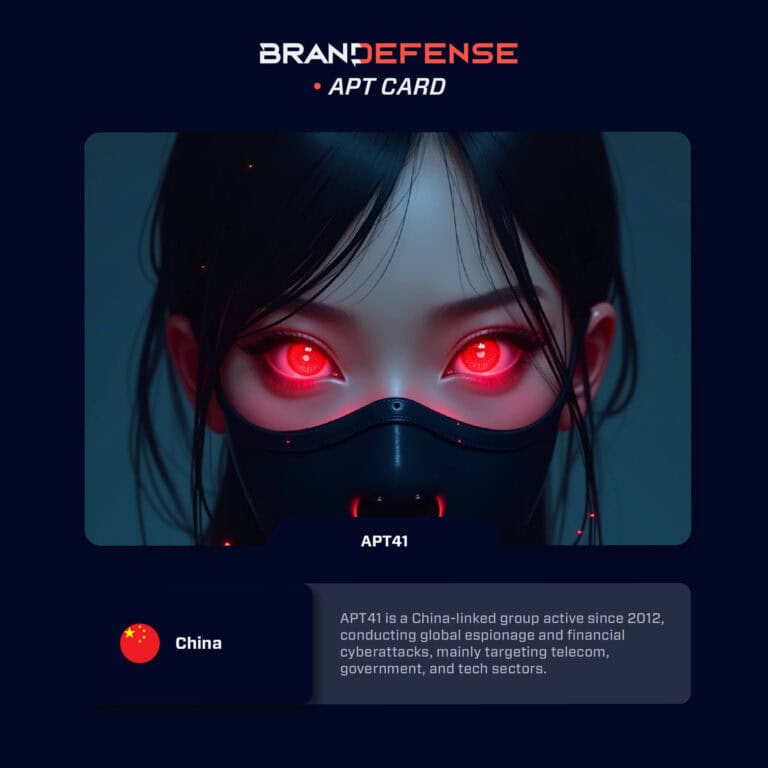
APT41: China’s Dual-Purpose Cyber Powerhouse
APT41 is one of China’s most versatile APT groups, combining espionage, large-scale supply chain compromises, and financially motivated intrusions targeting telecom, government, and technology sectors worldwide.
APT Groups
APT41: China’s Dual-Purpose Cyber Powerhouse
APT41 is one of China’s most versatile APT groups, combining espionage, large-scale supply chain compromises, and financially motivated intrusions targeting telecom, government, and technology sectors worldwide.
 APT Groups
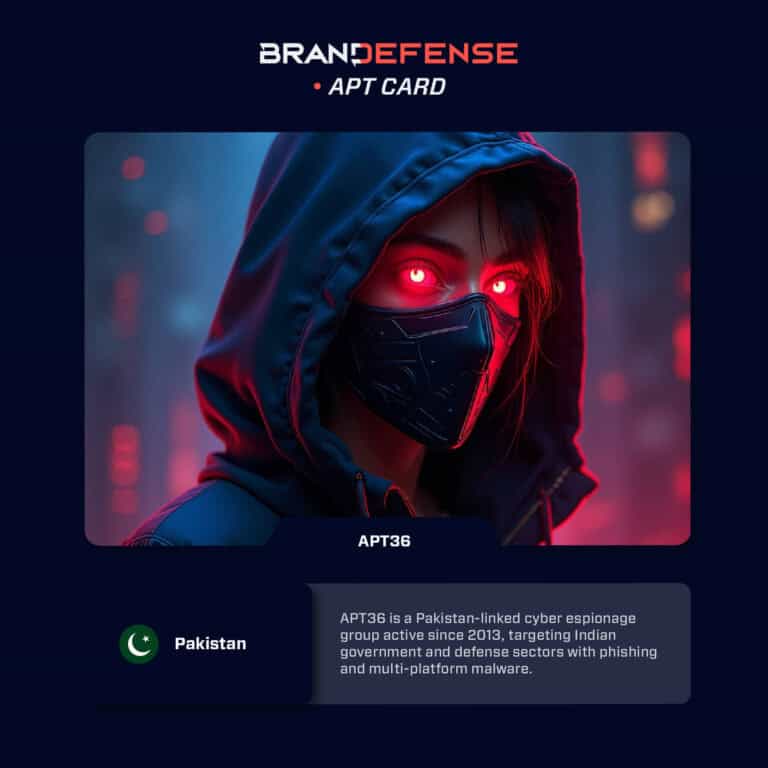
Operation C-Major (APT36): A Persistent Pakistan-Linked Cyber Espionage Threat
APT36 is a Pakistan-linked APT group active since 2013, known for targeting government, military, and research sectors with phishing, RATs, and Android spyware.
APT Groups
Operation C-Major (APT36): A Persistent Pakistan-Linked Cyber Espionage Threat
APT36 is a Pakistan-linked APT group active since 2013, known for targeting government, military, and research sectors with phishing, RATs, and Android spyware.
 APT Groups
APT28: Russia’s Persistent Cyber Espionage Arm
APT28 (Fancy Bear) is one of the most aggressive and persistent Russian state-linked APT groups, known for cyber espionage, Outlook exploits, election interference, and high-impact operations…
APT Groups
APT28: Russia’s Persistent Cyber Espionage Arm
APT28 (Fancy Bear) is one of the most aggressive and persistent Russian state-linked APT groups, known for cyber espionage, Outlook exploits, election interference, and high-impact operations…
About The Blog.
Last updated June 9, 2026-
Articles on ransomware, APT groups, the dark web, digital risk protection, fraud, sector analysis and VIP security, written for security teams.
-
New articles are added several times a month. The newest come first, and every article shows its publish date.
-
Use the topic chips above the list to open one topic, or type a word in the search box. Each topic has its own page.
-
Articles draw on public sources such as CISA advisories, MITRE ATT&CK and ENISA reports. Sources are listed at the end of an article when it cites them.
-
The site feed at brandefense.io/feed/ lists new posts. The email sign-up box is on the All Resources and Reports pages.
-
Brandefense is an AI-driven threat intelligence company. Its platform covers cyber threat intelligence, digital risk protection and external attack surface management. You can request a demo on your own domain from the Request A Demo page.
-
The blog page shows 470 articles. You can open all of them or pick one topic, such as APT Groups, Dark Web, Ransomware or Fraud. Each article shows its publish date.
-
The blog describes its articles as explained by the analysts who track threats. They cover threat actors, dark web activity, ransomware and digital risk. The newest articles appear first.
-
Yes. APT Groups is one of the topic chips above the list, and it opens only the articles on that topic. The Knowledge Hub also holds profiles of threat groups.
-
The surface web is the part of the internet that search engines list. The deep web is content that search engines do not list, such as pages behind a login. The dark web needs special software to reach. The blog has an article that explains the three layers in plain words.